Sulfuric acid clouds of Venus can’t dissolve life, new experiments find
Venus may be a hellscape by our standards, but there’s a chance that some forms of life could evolve there. A new MIT study has now found that the building blocks of life are surprisingly stable in highly concentrated sulfuric acid – which Venus’ cloud… Continue reading Sulfuric acid clouds of Venus can’t dissolve life, new experiments find→

Reducing intake of one amino acid improves longevity & health in mice

New research has found that reducing the intake of a single amino acid, isoleucine, by two-thirds, improved the lifespan, weight, and health of middle-aged mice without requiring a drop in calorie intake. The findings suggest that limiting dietary leve… Continue reading Reducing intake of one amino acid improves longevity & health in mice→

Could taurine be the new fountain of youth?

Aging is an inevitable part of living. But inevitable as it is, many are keen to find ways to reverse – or at least slow – it. A new study found that a naturally occurring amino acid was linked to the aging process in mice, monkeys and worms, and think… Continue reading Could taurine be the new fountain of youth?→

AI runs 10,000 experiments a day on bacteria to speed up discoveries

Scientific work often involves sifting through enormous amounts of data, a task that’s overwhelmingly mundane for humans but a piece of cake for artificial intelligence. A new platform dubbed BacterAI can conduct as many as 10,000 experiments per day t… Continue reading AI runs 10,000 experiments a day on bacteria to speed up discoveries→

Special diet triggers self-destruction of brain cancer cells in mice

By removing certain amino acids from the diets fed to rodents suffering from a deadly form of brain cancer known as glioblastoma, researchers found that destructive cells began dying through a process called ferroptosis. What’s more, the mice that were… Continue reading Special diet triggers self-destruction of brain cancer cells in mice→

Ancient protein study reveals how natural selection predates life itself

Exactly how life arose out of non-living matter is a major mystery, and a new study has found that natural selection may have played a role before life itself even existed on Earth. By recreating the primordial soup, scientists identified how a cocktai… Continue reading Ancient protein study reveals how natural selection predates life itself→

Newly discovered chemical reactions could explain the origin of life

Exactly how non-living molecules sparked into life is one of the most puzzling mysteries of science. Now scientists at Scripps Research have discovered a new set of chemical reactions that can produce the building blocks of life out of materials though… Continue reading Newly discovered chemical reactions could explain the origin of life→

Newly discovered chemical reactions could explain the origin of life

Exactly how non-living molecules sparked into life is one of the most puzzling mysteries of science. Now scientists at Scripps Research have discovered a new set of chemical reactions that can produce the building blocks of life out of materials though… Continue reading Newly discovered chemical reactions could explain the origin of life→

A Fascinating Plot Twist as Researchers Recreate Classic “Primordial Soup” Experiment

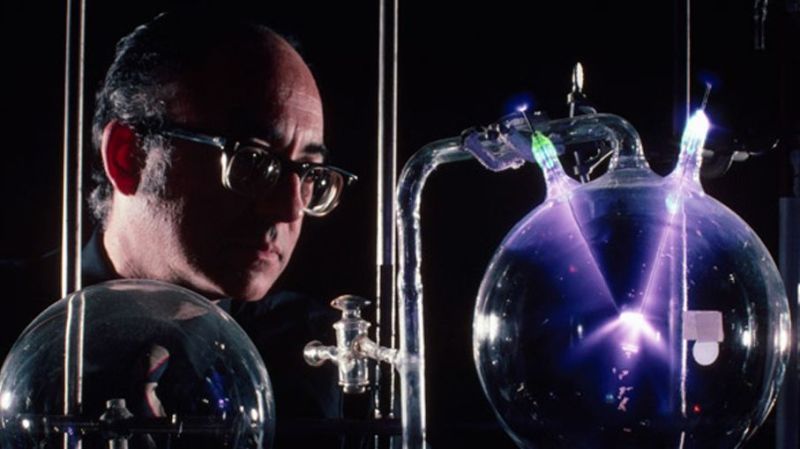
Science is built on reproducibility; if someone else can replicate your results, chances are pretty good that you’re looking at the truth. And there’s no statute of limitations on reproducibility; …read more Continue reading A Fascinating Plot Twist as Researchers Recreate Classic “Primordial Soup” Experiment→

Self-replicating protocells created in lab may be life’s “missing link”

Exactly how life first emerged from non-living matter is one of the most enduring mysteries of science. In a new study, Japanese scientists have created self-replicating protocells in the lab, which they say could represent the “missing link” between c… Continue reading Self-replicating protocells created in lab may be life’s “missing link”→