2019 Digital Identity Progress Report

Schools out for summer?  Well not quite.  Unless you’re living in the east coast of Australia, it’s looking decidedly bleak weather wise for most of Europe and the American east coast.  But I digress.  Is it looking bleak for your d… Continue reading 2019 Digital Identity Progress Report

A Zero Trust Manifesto

A Google search for “zero trust” returns ~ 195Million results.  Pretty sure some are not necessarily related to access management and cyber security, but a few probably are.  Zero Trust was a term coined by analyst group Forrester… Continue reading A Zero Trust Manifesto

The Role Of Mobile During Authentication

Nearly all the big player social networks now provide a multi-factor authentication option – either an SMS sent code or perhaps key derived one-time password, accessible via a mobile app.  Examples include Google’s Authenticator, Faceb… Continue reading The Role Of Mobile During Authentication

How Information Security Can Drive Innovation

Information Security and Innovation: often at two different ends of an executive team’s business strategy. The non-CIO ‘C’ level folks want to discuss revenue generation, efficiency and growth. Three areas often immeasurably enhanced … Continue reading How Information Security Can Drive Innovation

2020: Machine Learning, Post Quantum Crypto & Zero Trust

Welcome to a digital identity project in 2020! You’ll be expected to have a plan for post-quantum cryptography.  Your network will be littered with “zero trust” buzz words, that will make you suspect everyone, everything and every transaction.&#16… Continue reading 2020: Machine Learning, Post Quantum Crypto & Zero Trust

A Design for Modern Authentication

The password is dead. Long live the password! I have lost count of how many articles and blogs I have seen with regards to the weaknesses, the management, the flexibility, security, insecurity and overall usage of passwords when it comes to user authentication. We all use them and they’re not going anywhere any time soon. OK, so next step. What else can and should we be using for our user and device based authentication and login journeys?

Where We Are Now – The Sticking Plaster of MFA

So we accept that the traditional combo of user name and passwords is bad for our (system) health. Step forward multi-factor authentication. Or 2FA. Take your pick. This generally saw the introduction of something you have in the form of a token, phone-as-a-token or some other out of band mechanism that would create a one-time-password. Traditionally the “out of band” mechanism was either an email or SMS to a preregistered address or phone number, that contained a 6 digit pass code. Internal or employee systems would often leverage a hard token – either a USB dongle or a small tag with a tiny display that would show a rotating pin. These concepts were certainly better from a security perspective, but a) were not unbreakable and b) often created a disjointed user login experience with lots on interruptions and user interaction.

Basic MFA factors

Where We Are Moving To – Deca-factor Authentication!

OK, so user name and passwords are not great. MFA is simple, pretty cheap to implement, but means either the end user needs to carry something around (a bit 2006) or has an interrupted login journey by constantly being asked for a one-time-password. What we need is not two-factor-authentication but deca-factor-authentication! More factors. At least 10 to be precise. Increase the factors and aim to reduce the material impact of a single factor compromise whilst simultaneously reducing the number of user interrupts. These 10 factors (it could be 8, it could be 15, you get the idea) are all about introducing a broad spectrum analysis for the login journey.

Each factor is must more cohesive and modular, analysing a single piece of the login journey. The login journey could still leverage pretty static profile related data such as a user name, but is augmented with much more context – the location, time, device origin of the request and comparison factors that look at previous login requests to determine patterns or abnormalities.
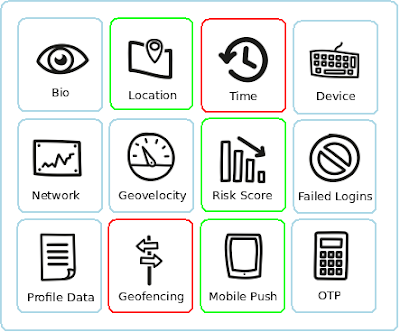
Breaking authentication down? “Deca-factors”

Some of these factors could “pass” and some could “fail” during the login journey, but the process is much about about accumulating and analysing risk and therefore being able to respond to high risk more accurately. Applying 2FA to every user login does not reduce risk per-se, it simply applies a blanket risk to every actor.

Wouldn’t it be much better to allow login variation for genuine users who do regularly change machine, location, network and time zone? Wouldn’t it be better to give users more choice over their login journeys and provide numerous options if and when high risks scenarios do occur?

 Another key area I think authentication is moving towards, is that of transparency. “Frictionless”, “effortless” or “zero-effort” logins are all the buzz. If, as an end user I enrol, sacrifice the privacy regarding a device fingerprint, maybe download a OTP or push app, why can’t I just “login” without having my experience interrupted? The classic security/convenience paradox. By introducing more factors and “gluing” those factors together with processing logic, the user authentication system can be much more responsive – perhaps mimicking a state machine, designed in a non-deterministic fashion, where any given factor could have multiple outcomes.

Where We Want To Get To – Transparent Pre-Authentication

So I guess the sci-fi end goal is to just turn up at work/coffee shop/door/car/website/application (delete as applicable) and just present one selves. The service would not only “know” who you were, but also trust that it is you. A bit like the Queen. Every time you presented yourself, transparent background checks would continually evaluate every part of the interaction, looking for changes and identifying risk.
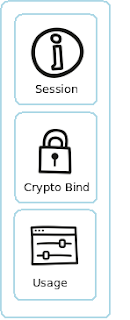
Session + Bind + Usage – increasing transparency?

The closest we are to that today in the web world at least, is the exchange of the authentication process for a cookie/session/tokenId/access_token. Whether that is stateless or stateful, it’s something to represent the user when they attempt to gain access to the service again. Couple that token to some kind of binding (either to a PKI key pair, or TLS session) to reduce the impact of token theft and there is some kind of repeatable access use case. However, change is all around and the token presentation, must therefore be coupled with all usage, context, resource and transaction data that the token is attempting to access, to allow the authentication machine to loop through the necessary deca-factors either individually or collectively to identify risk or change.

Authentication is moving on.  A more modern system must accommodate a broad spectrum  when it comes to analysing who is instigating a transaction which must also be coupled with mechanisms that increase transparency and pre-identification of risk without unnecessary and obtrusive interruptions.
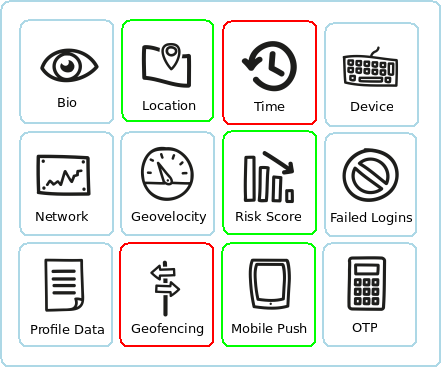
Continue reading A Design for Modern Authentication

Why Tim Berners-Lee Is Right About Internet Privacy

Last week, the “father” of the Internet, Tim Berners-Lee, did a series of interviews to mark the 28 year anniversary since he submitted his original proposal for the worldwide web.

The interviews were focused on the phenomenal success of the web, along with a macabre warning describing 3 key areas we need to change in order to “save” the Internet as we know it.

The three points were:

  1. We’ve lost control of our personal data
  2. It’s too easy for misinformation to spread on the web
  3. Political advertising online needs transparency and understanding
I want to primarily discuss the first point – personal data, privacy and our lack of control.

As nearly every private, non-profit and public sector organisation on the planet, either has a digital presence, or is in the process of transforming itself to be a digital force, the transfer of personal data to service provider is growing at an unprecedented rate. 

Every time we register for a service – be it for an insurance quote, to submit a tax return, when we download an app on our smart phones, register at the local leisure centre, join a new dentists or buy a fitness wearable, we are sharing an ever growing list of personal information or providing access to our own personal data.

The terms and conditions often associated with such registration flows, are often so full of “legalese”, or the app permissions or “scope” so large and complex, that the end user literally has no control or choice over the type, quality and and duration of the information they share.  It is generally an “all or nothing” type of data exchange.  Provide the details the service provider is asking for, or don’t sign up to the service. There are no alternatives.

This throws up several important questions surrounding data privacy, ownership and control.
  1. What is the data being used for?
  2. Who has access to the data, including 3rd parties?
  3. Can I revoke access to the data?
  4. How long with the service provider have access to the data for?
  5. Can the end user amend the data?
  6. Can the end user remove the data from the service provider – aka right to erasure?
Many service providers are likely unable to provide an identity framework that can answer those sorts of questions.

The interesting news, is that there are alternatives and things are likely to change pretty soon.  The EU General Data Protection Regulation (GDPR), provides a regulatory framework around how organisations should collect and manage personal data.  The wide ranging regulation, covers things like how consent from the end user is managed and captured, how breach notifications are handled and how information pertaining to the reasons for data capture are explained to the end user.

The GDPR isn’t a choice either – it’s mandatory for any organisation (irregardless of their location) that handles data of European Union citizens.

Couple with that, new technology standards such as the User Managed Access working group being run by the Kantara Initiative, that look to empower end users to have more control and consent of data exchanges, will open doors for organisations who want to deliver personalised services, but do so in a more privacy preserving and user friendly way.

So, whilst the Internet certainly has some major flaws, and data protection and user privacy is a big one currently, there are some green shoots of recovery from an end user perspective.  It will be interesting to see what the Internet will look like another 28 years from now.


Continue reading Why Tim Berners-Lee Is Right About Internet Privacy