Resurrected 2.6-billion-year-old CRISPR enzymes can still edit cells

Researchers in Spain have resurrected ancient CRISPR proteins from millions and even billions of years ago. Not only can they still edit human cells, but they’re more versatile than modern versions, paving the way for new and improved synthetic CRISPR … Continue reading Resurrected 2.6-billion-year-old CRISPR enzymes can still edit cells

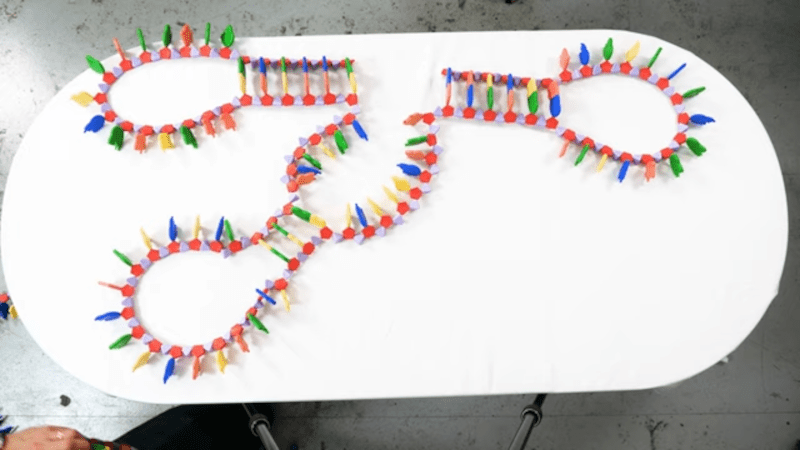
DNA origami system creates tiny, self-assembling pots and vases

Researchers have developed a new open-source program that can convert drawings or digital models into nanoscale sculptures made of DNA. In tests, the system nailed rounded objects like vases and bowls.Continue ReadingCategory: ScienceTags: DNA, Nano, N… Continue reading DNA origami system creates tiny, self-assembling pots and vases

“Hairpins” made of artificial DNA clasp and kill cancer

Researchers in Japan have demonstrated a promising new cancer treatment. The team developed artificial DNA sequences shaped like hairpins that latch onto molecules overexpressed in cancer and trigger a strong immune response.Continue ReadingCategory: M… Continue reading “Hairpins” made of artificial DNA clasp and kill cancer

Record-breaking 2-million-year-old DNA reveals long-lost ecosystem

An artist's impression of the ecosystem that lived in Greenland 2 million years ago, as revealed by the world's oldest DNA samples

The record for world’s oldest surviving DNA has been shattered. An international team of scientists has discovered DNA that dates back 2 million years, preserved in Ice Age sediment that captures an entire ecosystem of known – and unknown – lifeforms.

Continue Reading

Category: Science

Tags: , , , , , ,

Continue reading Record-breaking 2-million-year-old DNA reveals long-lost ecosystem

Mosquitoes could be tracked via synthetic DNA – which was fed to them

In order to better understand how mosquitoes spread diseases such as malaria, it’s important to know how far they range within a given region. A new technique could help scientists do so, and it involves feeding the insects DNA.Continue ReadingCategory… Continue reading Mosquitoes could be tracked via synthetic DNA – which was fed to them

“Chemical neurons” find and process data stored on DNA

Scientists have been experimenting with ways to use DNA as a data storage medium, but it’s difficult to retrieve and manipulate data written to it. Now a team has developed “chemical neurons” that can conduct calculations on data stored in DNA and read… Continue reading “Chemical neurons” find and process data stored on DNA

New CRISPR gene-editing system can “drag-and-drop” DNA in bulk

A new technique has been added to the CRISPR gene-editing toolbox. Known as PASTE, the system uses virus enzymes to “drag-and-drop” large sections of DNA into a genome, which could help treat a range of genetic diseases.Continue ReadingCategory: Biolog… Continue reading New CRISPR gene-editing system can “drag-and-drop” DNA in bulk

Police Use DNA Phenotyping to Limit Pool of Suspects to 15,000

The Queensland police department said that the DNA sample from the case generated a genealogy tree of “15,000 ‘linked’ individuals” and they have not been able to find a close match yet.  Continue reading Police Use DNA Phenotyping to Limit Pool of Suspects to 15,000

Britain’s oldest human genomes reveal cannibals and hunter-gatherers

Scientists have sequenced the genomes of two ancient skeletons, and found they constitute the oldest human DNA in the British isles. The data reveals the story of two separate migrations of early humans into what is now the UK, and how these different … Continue reading Britain’s oldest human genomes reveal cannibals and hunter-gatherers