Making a Concrete Sign
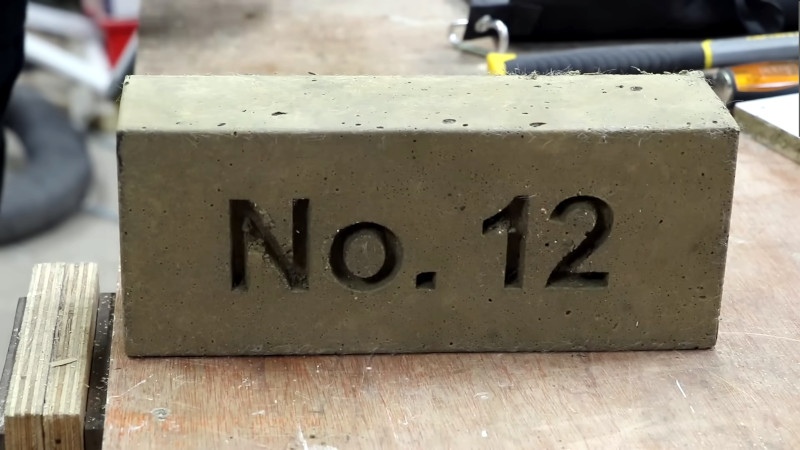
While paging through the feed a few days ago our attention was caught by something a little away from the ordinary in Hackaday terms, a DIY video about creating cast …read more Continue reading Making a Concrete Sign
Collaborate Disseminate
While paging through the feed a few days ago our attention was caught by something a little away from the ordinary in Hackaday terms, a DIY video about creating cast …read more Continue reading Making a Concrete Sign
According to some estimates, the generation of the heat used to produce traditional portland cement is responsible for 5% to 8% of all human-made CO2 emissions. A new substance known as C-Crete, however, is claimed to be a much greener – yet still prac… Continue reading C-Crete hailed as a planet-friendly alternative to cement
Though probably not the best choice for those without a head for heights, the Cliff Café dramatically perches on the edge of a precipice to offer visitors some amazing views to enjoy alongside their coffee. Designed by Trace Architecture Office (TAO), … Continue reading Cliff-hanging café is not for the faint-hearted
Traditional concrete manufacturing processes result in a ton of CO2 for every ton of cement produced – and since we’re talking about somewhere around 4.1 billion tons globally just in 2022 – more than half of that in China alone – cement is a massive c… Continue reading Revolutionary “true zero carbon” cement uses electrolysis, not furnaces
Researchers have found that concrete can be made 30% stronger by replacing a percentage of sand with spent coffee grounds, an organic waste product produced in huge amounts that usually ends up in landfill. The method also reduces the use of natural re… Continue reading Waste coffee grounds make concrete 30% stronger
MIT researchers have discovered that when you mix cement and carbon black with water, the resulting concrete self-assembles into an energy-storing supercapacitor that can put out enough juice to power a home or fast-charge electric cars.Continue Readin… Continue reading Low-cost additive turns concrete slabs into super-fast energy storage
Working with private industry, the University of Cambridge has gone one step beyond 3D printing with a concrete infrastructure unit that was not only made in an hour, but incorporates sensors to make it self-monitoring and, one day, self repairing.Cont… Continue reading Cambridge 3D prints game-changing smart concrete structure
Traffic is among the biggest sources of air pollution, but what if the very roads they drive on could help clear the air? Engineers in Korea have now demonstrated that photocatalytic concrete can help reduce pollution in tunnels.Continue ReadingCategor… Continue reading Light-activated concrete scrubs air pollution out of traffic tunnels
Finding low-cost, sustainable building materials is important for the environment and providing access to affordable housing. Researchers have created a composite building material by replacing sand in concrete and mortar with a common, non-degradable … Continue reading Discarded diapers lay the foundation for future homes – quite literally

Growing up, we got to play with all kinds of things in minature. Cars, horses, little Lego houses, the lot. What we didn’t get is a serious education with miniature-sized …read more Continue reading Miniature Concrete Hoover Damn Is Tiny Engineering Done Right