“From Putin with Love” – a novel by the New York Times

In recent weeks, the New York Times has written many stories on Russia’s hacking of the Trump election. This front page piece [*] alone takes up 9,000 words. Combined, the NYTimes coverage on this topic exceeds the length of a novel. Yet, for all this text, the number of verifiable facts also equals that of a novel, namely zero. There’s no evidence this was anything other than an undirected, Anonymous-style op based on a phishing campaign.

The question that drives us

It’s not that Russia isn’t involved, it’s that the exact nature of their involvement is complicated. Just because the hackers live in Russia doesn’t automatically mean their attacks are directed by the government.

It’s like the recent Islamic terrorist attacks in Europe and America. Despite ISIS claiming credit, and the perpetrators crediting ISIS, we are loathe to actually blame the attacks directly on ISIS. Overwhelmingly, it’s individuals who finance and plan their attacks, with no ISIS organizational involvement other than inspiration.

The same goes for Russian hacks. The Russian hacker community is complicated. There are lots of actors with various affiliations with the government. They are almost always nationalistic, almost always pro-Putin. There are many individuals and groups who act to the benefit of Putin/Russia with no direct affiliation with the government. Others do have ties with the government, but these are often informal relationships, sustained by patronage and corruption.

Evidence tying Russian attacks to the Russian government is thus the most important question of all — and it’s one that the New York Times is failing to answer. The fewer facts they have, the more they fill the void with vast amounts of verbiage.

Sustaining the narrative

Here’s a trick when reading New York Times articles: when they switch to passive voice, they are covering up a lie. An example is this paragraph from the above story [*]:

The Russians were also quicker to turn their attacks to political purposes. A 2007 cyberattack on Estonia, a former Soviet republic that had joined NATO, sent a message that Russia could paralyze the country without invading it. The next year cyberattacks were used during Russia’s war with Georgia.

Normally, editors would switch this to the active voice, or:

The next year, Russia used cyberattacks in their war against Georgia.

But that would be factually wrong. Yes, cyberattacks happened during the conflicts with Estonia and Georgia, but the evidence in both cases points to targets and tools going viral on social media and web forums. It was the people who conducted the attacks, not the government. Whether it was the government who encouraged the people is the big question — to which we have no answer. Since the NYTimes has no evidence pointing to the Russian government, they switch to the passive voice, hoping you’ll assume they meant the government was to blame.

It’s a clear demonstration that the NYTimes is pushing a narrative, rather than reporting just the facts allowing you to decide for yourself.

Tropes and cliches

The NYTimes story is dominated by cliches or “tropes”.

One such trope is how hackers are always “sophisticated”, which leads to the conclusion they must be state-sponsored, not simple like the Anonymous collective. Amusingly, the New York Times tries to give two conflicting “sophisticated” narratives at once. Their article [*] has a section titled “Honing Stealthy Tactics”, which ends with describing the attacks as “brazen”, full of “boldness”. In other words, sophisticated Russian hackers are marked by “brazen stealthiness”, a contradiction in terms. In reality, the DNC/DCCC/Podesta attacks were no more sophisticated than any other Anonymous attack, such as the one against Stratfor.

A related trope is the sophistication of defense. For example, the NYTimes describes [*] how the DNC is a non-profit that could not afford “the most advanced systems in place” to stop phishing emails. After the hacks, they installed the “robust set of monitoring tools”. This trope imagines there’s a magic pill that victims can use to defend themselves against hackers. Experts know this isn’t how cybersecurity works — the amount of money spent, or the advancement of technology, has little impact on an organization’s ability to defend itself.

Another trope is the word “target” that imagines that every effect from a hacker was the original intention. In other words, it’s the trope that tornados target trailer parks. As part of the NYTimes “narrative” is this story that “House candidates were also targets of Russian hacking” [*]. This is post-factual fake-news. Guccifer2.0 targeted the DCCC, not individual House candidates. Sure, at the request of some bloggers, Guccifer2.0 release part of their treasure trove for some specific races, but the key here is the information withheld, not the information released. Guccifer2.0 made bloggers beg for it, dribbling out bits at a time, keeping themselves in the news, wrapped in an aura of mysteriousness. If their aim was to influence House races, they’d’ve dumped info on all the races.

In other words, the behavior is that of an Anonymous-style hacker which the NYTimes twists into behavior of Russian intelligence.

The word “trope” is normally applied to fiction. When the NYTimes devolves into hacking tropes, like the “targets” of “sophisticated” hackers, you know their news story is fiction, too.

Anonymous government officials

In the end, the foundation of the NYTimes narrative relies upon leaked secret government documents and quotes by anonymous government officials [*]. This is otherwise known as “propaganda”.

The senior government officials are probably the Democrat senators who were briefed by the CIA. These senators leak their version of the CIA briefing, cherry picking the bits that support their story, removing the nuanced claims that were undoubtedly part of the original document.

It’s what the Society of Professional Journalists call the “Washington Game“. Everyone knows how this game is played. That’s why Marcy Wheeler (@emptywheel) [*] and Glenn Greenwald (@ggreenwald) [*] dissected that NYTimes piece. They are both as anti-Trump/anti-Russia as they come, so it’s not their political biases that lead them to challenge that piece. Instead, it’s their knowledge of what bad journalism looks like that motivated their criticisms.

If the above leaks weren’t authorized by Obama, the administration would be announcing an investigation into who is leaking major secrets. Thus, we know the leaks were “authorized”. Obama’s willingness to release the information unofficially, but not officially, means there are holes in it somewhere. There’s something he’s hiding, covering up. Otherwise, he’d have a press conference and field questions from reporters on the topic.

Conclusion

The issue of Russia’s involvement in the election is so important that we should demand real facts, real statements from the government that we can question and challenge. It’s too important to leave up to propaganda. If Putin is involved, we deserve to understand it, and not simply get the “made for TV” version given us by the NYTimes.

Propaganda is what we have here. The NYTimes has written a novel that delivers the message while protecting the government from being questioned. Facts are replaced with distorted narrative, worn tropes, and quotes from anonymous government officials.

The facts we actually see is an attack no more sophisticated than those conducted by LulzSec and Anonymous. We see an attack that is disorganized and opportunistic, exactly what we’d expect from an Anonymous-style attack. Putin’s regime may be involved, and they may have a plan, but the current evidence looks like casual hackers, not professional hackers working for an intelligence service.
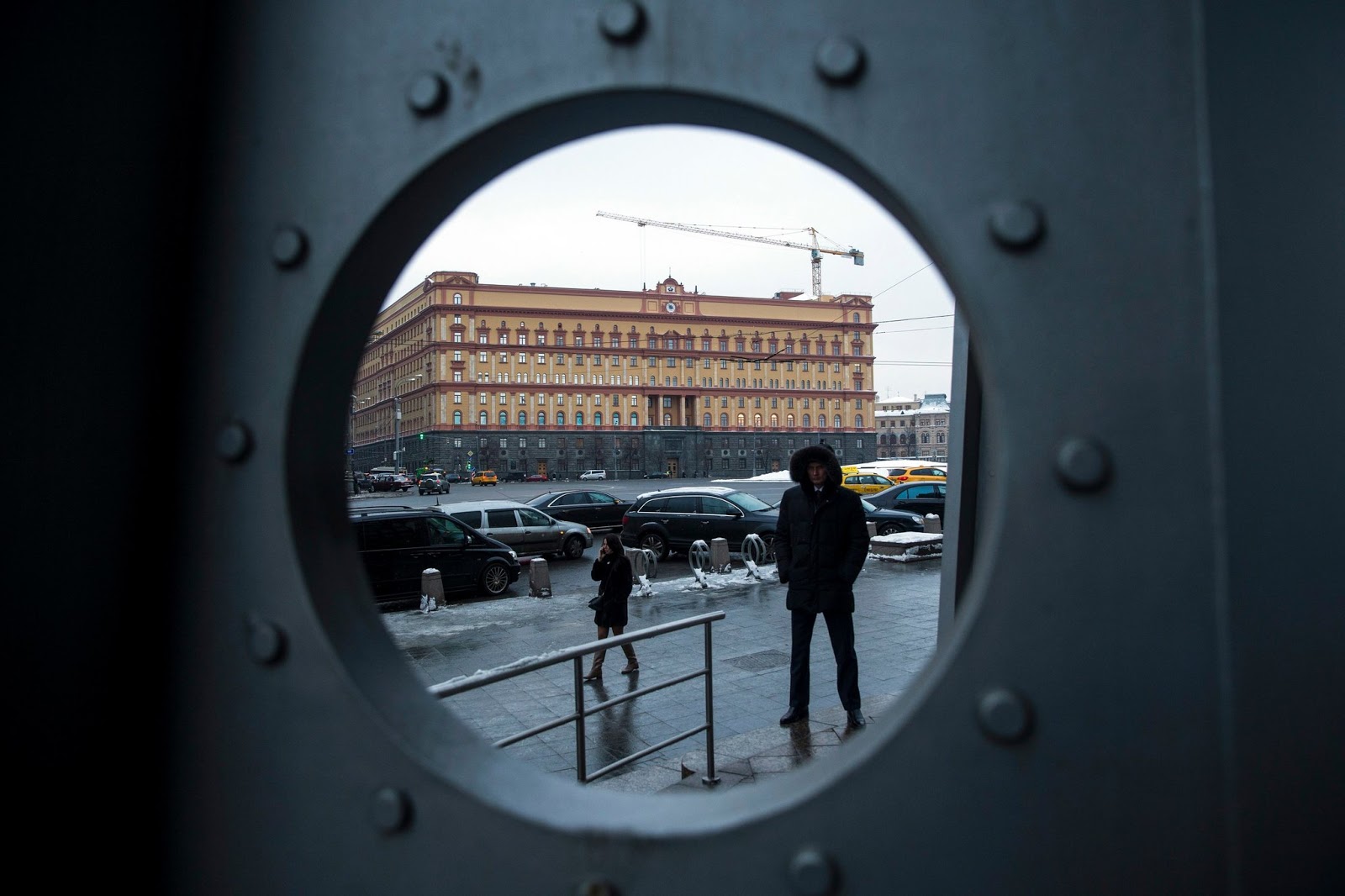
This artsy stock photo of FSB headquarters is not evidence.

Note: many ideas in this piece come from a discussion with a friend who doesn’t care to be credited

Continue reading “From Putin with Love” – a novel by the New York Times

Posted in SBN

"From Putin with Love" – a novel by the New York Times

In recent weeks, the New York Times has written many stories on Russia’s hacking of the Trump election. This front page piece [*] alone takes up 9,000 words. Combined, the NYTimes coverage on this topic exceeds the length of a novel. Yet, for all this text, the number of verifiable facts also equals that of a novel, namely zero. There’s no evidence this was anything other than an undirected, Anonymous-style op based on a phishing campaign.

The question that drives us

It’s not that Russia isn’t involved, it’s that the exact nature of their involvement is complicated. Just because the hackers live in Russia doesn’t automatically mean their attacks are directed by the government.

It’s like the recent Islamic terrorist attacks in Europe and America. Despite ISIS claiming credit, and the perpetrators crediting ISIS, we are loathe to actually blame the attacks directly on ISIS. Overwhelmingly, it’s individuals who finance and plan their attacks, with no ISIS organizational involvement other than inspiration.

The same goes for Russian hacks. The Russian hacker community is complicated. There are lots of actors with various affiliations with the government. They are almost always nationalistic, almost always pro-Putin. There are many individuals and groups who act to the benefit of Putin/Russia with no direct affiliation with the government. Others do have ties with the government, but these are often informal relationships, sustained by patronage and corruption.

Evidence tying Russian attacks to the Russian government is thus the most important question of all — and it’s one that the New York Times is failing to answer. The fewer facts they have, the more they fill the void with vast amounts of verbiage.

Sustaining the narrative

Here’s a trick when reading New York Times articles: when they switch to passive voice, they are covering up a lie. An example is this paragraph from the above story [*]:

The Russians were also quicker to turn their attacks to political purposes. A 2007 cyberattack on Estonia, a former Soviet republic that had joined NATO, sent a message that Russia could paralyze the country without invading it. The next year cyberattacks were used during Russia’s war with Georgia.

Normally, editors would switch this to the active voice, or:

The next year, Russia used cyberattacks in their war against Georgia.

But that would be factually wrong. Yes, cyberattacks happened during the conflicts with Estonia and Georgia, but the evidence in both cases points to targets and tools going viral on social media and web forums. It was the people who conducted the attacks, not the government. Whether it was the government who encouraged the people is the big question — to which we have no answer. Since the NYTimes has no evidence pointing to the Russian government, they switch to the passive voice, hoping you’ll assume they meant the government was to blame.

It’s a clear demonstration that the NYTimes is pushing a narrative, rather than reporting just the facts allowing you to decide for yourself.

Tropes and cliches

The NYTimes story is dominated by cliches or “tropes”.

One such trope is how hackers are always “sophisticated”, which leads to the conclusion they must be state-sponsored, not simple like the Anonymous collective. Amusingly, the New York Times tries to give two conflicting “sophisticated” narratives at once. Their article [*] has a section titled “Honing Stealthy Tactics”, which ends with describing the attacks as “brazen”, full of “boldness”. In other words, sophisticated Russian hackers are marked by “brazen stealthiness”, a contradiction in terms. In reality, the DNC/DCCC/Podesta attacks were no more sophisticated than any other Anonymous attack, such as the one against Stratfor.

A related trope is the sophistication of defense. For example, the NYTimes describes [*] how the DNC is a non-profit that could not afford “the most advanced systems in place” to stop phishing emails. After the hacks, they installed the “robust set of monitoring tools”. This trope imagines there’s a magic pill that victims can use to defend themselves against hackers. Experts know this isn’t how cybersecurity works — the amount of money spent, or the advancement of technology, has little impact on an organization’s ability to defend itself.

Another trope is the word “target” that imagines that every effect from a hacker was the original intention. In other words, it’s the trope that tornados target trailer parks. As part of the NYTimes “narrative” is this story that “House candidates were also targets of Russian hacking” [*]. This is post-factual fake-news. Guccifer2.0 targeted the DCCC, not individual House candidates. Sure, at the request of some bloggers, Guccifer2.0 release part of their treasure trove for some specific races, but the key here is the information withheld, not the information released. Guccifer2.0 made bloggers beg for it, dribbling out bits at a time, keeping themselves in the news, wrapped in an aura of mysteriousness. If their aim was to influence House races, they’d’ve dumped info on all the races.

In other words, the behavior is that of an Anonymous-style hacker which the NYTimes twists into behavior of Russian intelligence.

The word “trope” is normally applied to fiction. When the NYTimes devolves into hacking tropes, like the “targets” of “sophisticated” hackers, you know their news story is fiction, too.

Anonymous government officials

In the end, the foundation of the NYTimes narrative relies upon leaked secret government documents and quotes by anonymous government officials [*]. This is otherwise known as “propaganda”.

The senior government officials are probably the Democrat senators who were briefed by the CIA. These senators leak their version of the CIA briefing, cherry picking the bits that support their story, removing the nuanced claims that were undoubtedly part of the original document.

It’s what the Society of Professional Journalists call the “Washington Game“. Everyone knows how this game is played. That’s why Marcy Wheeler (@emptywheel) [*] and Glenn Greenwald (@ggreenwald) [*] dissected that NYTimes piece. They are both as anti-Trump/anti-Russia as they come, so it’s not their political biases that lead them to challenge that piece. Instead, it’s their knowledge of what bad journalism looks like that motivated their criticisms.

If the above leaks weren’t authorized by Obama, the administration would be announcing an investigation into who is leaking major secrets. Thus, we know the leaks were “authorized”. Obama’s willingness to release the information unofficially, but not officially, means there are holes in it somewhere. There’s something he’s hiding, covering up. Otherwise, he’d have a press conference and field questions from reporters on the topic.

Conclusion

The issue of Russia’s involvement in the election is so important that we should demand real facts, real statements from the government that we can question and challenge. It’s too important to leave up to propaganda. If Putin is involved, we deserve to understand it, and not simply get the “made for TV” version given us by the NYTimes.

Propaganda is what we have here. The NYTimes has written a novel that delivers the message while protecting the government from being questioned. Facts are replaced with distorted narrative, worn tropes, and quotes from anonymous government officials.

The facts we actually see is an attack no more sophisticated than those conducted by LulzSec and Anonymous. We see an attack that is disorganized and opportunistic, exactly what we’d expect from an Anonymous-style attack. Putin’s regime may be involved, and they may have a plan, but the current evidence looks like casual hackers, not professional hackers working for an intelligence service.

This artsy stock photo of FSB headquarters is not evidence.

Note: many ideas in this piece come from a discussion with a friend who doesn’t care to be credited

Continue reading "From Putin with Love" – a novel by the New York Times

Posted in Uncategorized

"From Putin with Love" – a novel by the New York Times

In recent weeks, the New York Times has written many stories on Russia’s hacking of the Trump election. This front page piece [*] alone takes up 9,000 words. Combined, the NYTimes coverage on this topic exceeds the length of a novel. Yet, for all this text, the number of verifiable facts also equals that of a novel, namely zero. There’s no evidence this was anything other than an undirected, Anonymous-style op based on a phishing campaign.

The question that drives us

It’s not that Russia isn’t involved, it’s that the exact nature of their involvement is complicated. Just because the hackers live in Russia doesn’t automatically mean their attacks are directed by the government.

It’s like the recent Islamic terrorist attacks in Europe and America. Despite ISIS claiming credit, and the perpetrators crediting ISIS, we are loathe to actually blame the attacks directly on ISIS. Overwhelmingly, it’s individuals who finance and plan their attacks, with no ISIS organizational involvement other than inspiration.

The same goes for Russian hacks. The Russian hacker community is complicated. There are lots of actors with various affiliations with the government. They are almost always nationalistic, almost always pro-Putin. There are many individuals and groups who act to the benefit of Putin/Russia with no direct affiliation with the government. Others do have ties with the government, but these are often informal relationships, sustained by patronage and corruption.

Evidence tying Russian attacks to the Russian government is thus the most important question of all — and it’s one that the New York Times is failing to answer. The fewer facts they have, the more they fill the void with vast amounts of verbiage.

Sustaining the narrative

Here’s a trick when reading New York Times articles: when they switch to passive voice, they are covering up a lie. An example is this paragraph from the above story [*]:

The Russians were also quicker to turn their attacks to political purposes. A 2007 cyberattack on Estonia, a former Soviet republic that had joined NATO, sent a message that Russia could paralyze the country without invading it. The next year cyberattacks were used during Russia’s war with Georgia.

Normally, editors would switch this to the active voice, or:

The next year, Russia used cyberattacks in their war against Georgia.

But that would be factually wrong. Yes, cyberattacks happened during the conflicts with Estonia and Georgia, but the evidence in both cases points to targets and tools going viral on social media and web forums. It was the people who conducted the attacks, not the government. Whether it was the government who encouraged the people is the big question — to which we have no answer. Since the NYTimes has no evidence pointing to the Russian government, they switch to the passive voice, hoping you’ll assume they meant the government was to blame.

It’s a clear demonstration that the NYTimes is pushing a narrative, rather than reporting just the facts allowing you to decide for yourself.

Tropes and cliches

The NYTimes story is dominated by cliches or “tropes”.

One such trope is how hackers are always “sophisticated”, which leads to the conclusion they must be state-sponsored, not simple like the Anonymous collective. Amusingly, the New York Times tries to give two conflicting “sophisticated” narratives at once. Their article [*] has a section titled “Honing Stealthy Tactics”, which ends with describing the attacks as “brazen”, full of “boldness”. In other words, sophisticated Russian hackers are marked by “brazen stealthiness”, a contradiction in terms. In reality, the DNC/DCCC/Podesta attacks were no more sophisticated than any other Anonymous attack, such as the one against Stratfor.

A related trope is the sophistication of defense. For example, the NYTimes describes [*] how the DNC is a non-profit that could not afford “the most advanced systems in place” to stop phishing emails. After the hacks, they installed the “robust set of monitoring tools”. This trope imagines there’s a magic pill that victims can use to defend themselves against hackers. Experts know this isn’t how cybersecurity works — the amount of money spent, or the advancement of technology, has little impact on an organization’s ability to defend itself.

Another trope is the word “target” that imagines that every effect from a hacker was the original intention. In other words, it’s the trope that tornados target trailer parks. As part of the NYTimes “narrative” is this story that “House candidates were also targets of Russian hacking” [*]. This is post-factual fake-news. Guccifer2.0 targeted the DCCC, not individual House candidates. Sure, at the request of some bloggers, Guccifer2.0 release part of their treasure trove for some specific races, but the key here is the information withheld, not the information released. Guccifer2.0 made bloggers beg for it, dribbling out bits at a time, keeping themselves in the news, wrapped in an aura of mysteriousness. If their aim was to influence House races, they’d’ve dumped info on all the races.

In other words, the behavior is that of an Anonymous-style hacker which the NYTimes twists into behavior of Russian intelligence.

The word “trope” is normally applied to fiction. When the NYTimes devolves into hacking tropes, like the “targets” of “sophisticated” hackers, you know their news story is fiction, too.

Anonymous government officials

In the end, the foundation of the NYTimes narrative relies upon leaked secret government documents and quotes by anonymous government officials [*]. This is otherwise known as “propaganda”.

The senior government officials are probably the Democrat senators who were briefed by the CIA. These senators leak their version of the CIA briefing, cherry picking the bits that support their story, removing the nuanced claims that were undoubtedly part of the original document.

It’s what the Society of Professional Journalists call the “Washington Game“. Everyone knows how this game is played. That’s why Marcy Wheeler (@emptywheel) [*] and Glenn Greenwald (@ggreenwald) [*] dissected that NYTimes piece. They are both as anti-Trump/anti-Russia as they come, so it’s not their political biases that lead them to challenge that piece. Instead, it’s their knowledge of what bad journalism looks like that motivated their criticisms.

If the above leaks weren’t authorized by Obama, the administration would be announcing an investigation into who is leaking major secrets. Thus, we know the leaks were “authorized”. Obama’s willingness to release the information unofficially, but not officially, means there are holes in it somewhere. There’s something he’s hiding, covering up. Otherwise, he’d have a press conference and field questions from reporters on the topic.

Conclusion

The issue of Russia’s involvement in the election is so important that we should demand real facts, real statements from the government that we can question and challenge. It’s too important to leave up to propaganda. If Putin is involved, we deserve to understand it, and not simply get the “made for TV” version given us by the NYTimes.

Propaganda is what we have here. The NYTimes has written a novel that delivers the message while protecting the government from being questioned. Facts are replaced with distorted narrative, worn tropes, and quotes from anonymous government officials.

The facts we actually see is an attack no more sophisticated than those conducted by LulzSec and Anonymous. We see an attack that is disorganized and opportunistic, exactly what we’d expect from an Anonymous-style attack. Putin’s regime may be involved, and they may have a plan, but the current evidence looks like casual hackers, not professional hackers working for an intelligence service.

This artsy stock photo of FSB headquarters is not evidence.

Note: many ideas in this piece come from a discussion with a friend who doesn’t care to be credited

Continue reading "From Putin with Love" – a novel by the New York Times

Posted in Uncategorized

That anti-Trump Recode article is terrible

Trump’s a dangerous populist. However, the left-wing media’s anti-Trump fetishism is doing nothing to stop Trump. It’s no better than “fake news” — it gets passed around a lot on social-media, but is intellectually bankrupt, unlikely to change anybody’s mind. A good example is this op-ed on Re/Code [*] about Silicon Valley leaders visiting Trump.

The most important feature of that Re/code article is that it contains no criticism of Trump other than the fact that he’s a Republican. Half the country voted for Trump. Half the country voted Republican. It’s not just Trump that this piece imagines as being unreasonable, but half the country. It’s a fashionable bigotry among some of Silicon Valley’s leftist elite.

But CEOs live in a world where half their customers are Republican, where half their share holders are Republican. They cannot lightly take political positions that differ from their investors/customers. The Re/code piece claims CEOs said “we are duty-bound as American citizens to attend”. No, what they said was “we are duty-bound as officers of our corporations to attend”.

The word “officer”, as in “Chief Operating Officer”, isn’t an arbitrary title like “Senior Software Engineer” that has no real meaning. Instead, “officer” means “bound by duty”. It includes a lot of legal duties, for which they can go to jail if they don’t follow. It includes additional duties to shareholders, for which the board can fire them if they don’t follow.

Normal employees can have Twitter disclaimers saying “these are my personal opinions only, not that of my employer”. Officers of corporations cannot. They are the employer. They cannot champion political causes of their own that would impact their stock price. Sure, they can do minor things, like vote, or contribute quietly to campaigns, as long as they aren’t too public. They can also do political things that enhances stock price, such as opposing encryption backdoors. Tim Cook can announce he’s gay, because that enhances the brand image among Apple’s key demographic of millennials. It’s not something he could do if he were the CEO of John Deere Tractors.

Among the things the CEO’s cannot do is take a stance against Donald Trump. The Boeing thing is a good example. The Boeing’s CEO criticized Trump’s stance on free trade, and 30 minutes later Trump tweeted criticisms of a $4 billion contract with Boeing, causing an immediate billion drop in Boeing’s stock price.

This incident shows why the rest of us need to oppose Trump. Such vindictive politics is how democracies have failed. We cannot allow this to happen here. But the hands of CEOs are tied — they are duty bound to avoid such hits to their stock price.

On the flip, this is one of the few chances CEOs will be able to lobby Trump. If Trump has proven anything, it’s that he has no real positions on things. This would be a great time to change his mind on “encryption backdoors”, for example.

Trump is a dangerous populist who sews distrust in the institutions that give us a stable, prosperous country. Any institution, from the press, to the military, to the intelligence services, to the election system, is attacked, brought into disrepute, even if it supports him. Trump has a dubious relationship with the truth, such as his repeated insistence he won a landslide rather than by a slim margin. He has deep character flaws, such as his vindictive attacks against those who oppose him (Boeing is just one of many examples). Hamilton electors cite deep, patriotic principles for changing their votes, such as Trump’s foreign influences and demagoguery.

What I’m demonstrating here is that thinking persons have good reasons to oppose Trump that can be articulated without mentioning political issues that divide Democrats and Republicans. That the Re/code article is unable to do so makes it simply “hyper-partisan news”, the sort that stroke’s people’s prejudices and passions to get passed around a lot on social media, but which is unlikely to inform anybody or change any minds. In other words, it’s no better than “fake-news”.


@ErrataRob @srunnels you’re an idiot to say this. I like tons of republicans. Good lord

— Kara Swisher (@karaswisher) December 13, 2016

Continue reading That anti-Trump Recode article is terrible

Posted in Uncategorized