Linkz for Intelligence Driven Security and Threat Intelligence

What’s the strategy one should use when trying to defend an organization against the threats we face today. At times the security strategy has been reactive. Decisions and the direction forward are based on the latest incident the organization experienced. This approach is not effective since it is the equivalent of firefighting where resources are used on addressing the latest fire without identifying the underlying issues causing the fires in the first place. At other times the security strategy is based on compliance. Decisions and the direction forward are based on regulations or standards the organization has to be compliant with. This approach is not as effective either. It will provide an organization with some minimum security controls but it may not help with defending against the threats we face today (the news highlights organizations who are compliant but are still compromised anyway). One security strategy that has gained traction over the years and is more effective than the previous two is intelligence driven security. The direction forward and “decisions are made based on real-time knowledge regarding the cyber adversaries and their attack methods, and the organization’s security posture against them”. This approach is more effective than the previous two since it enables an organization to allocate security resources to address the highest risks and threats they face.

In this post, I sharing linkz to various resources I found useful over the past few years related to the intelligence driven security, threat intelligence, threat intelligence data, consuming threat intelligence data, and threat intelligence sharing.

Intelligence Driven Security Links


These links are related to intelligence driven security, which RSA defined as “developing real-time knowledge on threats and the organization’s posture against those threats in order to prevent, detect, and/or predict attacks, make risk decisions, optimize defensive strategies, and enable action.”

Achieving Intelligence-Driven Information Security


The first link is one that will always hold a certain personal value since it was one of the first papers I read on the topic years ago. The RSA paper Getting Ahead of Advanced Threats: Achieving Intelligence-Driven Information Security discusses how an organization can approach managing their security program in this manner. The paper addresses: what organizations need to know, categories of cyber-risk data, intelligence driven information security, roadmap to achieving intelligence driven information security, opportunities for quick wins, and information sharing. I spent years performing vulnerability assessments against other organizations and each engagement it became more and more clear that the traditional approaches to security management were no longer effective. What was needed was an approach were factual information influenced decisions instead of decisions being based solely on someone’s judgment or gut feeling. The approach in this paper is very light on details but it does address the thought process behind it and to me this was very helpful. The paper did nail the foundation one needs to have in place to achieve this as seen in the following quote: “to be ready to take on an intelligence program, the organization needs to have a foundation in place for monitoring the network for intrusions and a workflow process for responding to incidents.”

Strategic Cyber Intelligence


The reason behind leveraging intelligence in security management is to help people make better security decisions. These decisions can be related to addressing risks, security strategies, and resource usage. Despite this being the driving force behind intelligence driven security a good percentage of the material I’ve seen on the topic is more focused on the real time intelligence about threats and not about the intelligence an organization needs to make better security decisions. The next link I picked up from Richard Bejtlich and it’s a document titled Strategic Cyber Intelligence. If there is only one link to read in this post then this document is it. My words wouldn’t do justice in describing this document so instead I’m opting to use part of the executive summary to describe it.

While there has been much emphasis on tactical cyber intelligence to help understand the “on-the-network” cyber-attacks so frequently in the news, there has been little discussion about the strategic and operational levels in order to better understand the overall goals, objectives, and inter-relationships associated with these tactical attacks. As a result, key consumers such as C-suite executives, executive managers, and other senior leaders are not getting the right type of cyber intelligence to efficiently and effectively inform their organizations’ risk management programs. This traditionally tactical focus also hampers the capability of the cyber intelligence function to communicate cyber risks in a way that leaders can fully interpret and understand.

Adopting Intelligence Driven Security


The next links I found helpful since they had some good talking points and a nice diagram to get buy-in to approach security in a more intelligent manner. The RSA Adopting Intelligence Driven Security paper provides a high-level overview about adopting an intelligence driven security strategy. Topics discussed include: visibility, analysis, action, and difference between today’s security strategies and intelligence driven. The RSA blog post What is Intelligence Driven Security? provides very similar but less information than their paper.

Threat Intelligence Links


Threat intelligence is a needed component in achieving intelligence driven security but the two are not the same. This can be seen in the iSightPartners threat intelligence definition, which is “cyber threat intelligence is knowledge about adversaries and their motivations, intentions, and methods that is collected, analyzed, and disseminated in ways that help security and business staff at all levels protect the critical assets of the enterprise”. These links provide information about threat intelligence.

Threat intelligence: Collecting, Analysing, and Evaluating


The MWR InfoSecurity Threat intelligence: Collecting, Analysing, and Evaluating whitepaper provides an excellent overview about threat intelligence and a threat intelligence program. Topics included are: what is threat intelligence, building a threat intelligence program, strategic/operational/tactical threat intelligence, and technical threat intelligence. The paper is well worth taking the time to read since the overview touched on most components of a threat intelligence program.

Definitive Guide to Cyber Threat Intelligence


iSIGHT Partners is a vendor providing threat intelligence services. They released a short ebook titled Definitive Guide to Cyber Threat Intelligence (at the time of this post the link for the PDF is here and if it no longer works then you’ll need to provide them your email address to receive the download link). In their own words the following is why they wrote the book: “We figured that since we wrote the book on cyber threat intelligence, we might as well write the book on cyber threat intelligence”. The book itself is 74 pages and addresses the following: defining cyber threat intelligence, developing threat intelligence requirements, collecting threat information, analyzing and disseminating threat intelligence, using threat intelligence, implementing an intelligence program, and selecting the right threat intelligence partner. The one area where I think this book shines is by outlining the components that a commercial threat intelligence service should have.

Actionable information for Security Incident Response


ENISA released the Actionable information for Security Incident Response document that was “intended as a good practice guide for the exchange and processing of actionable information”. The document discusses some of the following points: properties of actionable information, levels of information, collecting information, preparing information, storing information, analyzing information, and case studies. The document does an outstanding job outlining the characteristics of actionable intelligence as well as a process one could use to process it.

Threat Intelligence for Dummies


Another ebook released by another threat intelligence vendor named Norse is the book Threat Intelligence for Dummies. The book is a short read (52 pages) and touches on the following areas: understanding threat intelligence, gathering threat intelligence, scoring threat intelligence, supporting incident response, threat mitigation, and buying criteria for threat intelligence solutions. The book is another option for those looking for a more general overview about threat intelligence.

Five Steps to Build an Effective Threat Intelligence Capability


The next link is for a Forrester report about building an effective threat intelligence capability. The first half of the report outlines the case for needing a threat intelligence capability while the second half discusses the actual capability. The topics include: intelligence cycle, intelligence disciplines, and five steps to build the intelligence capability. This report is another approach to building the capability and I find it beneficial to see different approaches for accomplishing the same thing. It makes it easier to pick and choose aspects from the various approaches to find what works best for you.

Open Source Threat Intelligence Data Feeds Links


Data about threats, adversaries, and methods they use can be obtained from various sources. One source for regularly updated threat data is from publically available sources. Despite the data being freely available care must be taken in selecting the data feeds to use. For each data feed its characteristics must be evaluated to determine the value added for an organization’s security monitoring and response process. (Side note: consuming as many feed as possible is counterproductive and could actually impede security monitoring.)

Evaluating Threat Intelligence Data Feeds


These links are a bit dated but they are as relevant today as when they were published. David Bianco’s posts The Pyramid of Pain and What Do You Get When You Cross a Pyramid With A Chain? outline an approach to evaluate the value of indicators. The Pyramid of Pain is a versatile model that can be used when not only evaluating indicators in open source threat intelligence feeds but it is also helpful when trying to assess the coverage in a security monitoring program.

Feeds, Feeds, and More Feeds


The next link is a word of caution from Jack Crook about using threat intelligence data feeds. In his post Feeds, feeds and more feeds his provides some food for thought for those looking to start consuming feeds. Below is a very telling quote from his post:

By blindly alerting on these types of indicators you also run the risk of cluttering your alert console with items that will be deemed, 99.99% of the time, false positive. This can cause your analysts to spend much unneeded time analyzing these while higher fidelity alerts are sitting there waiting to be analyzed.”

Threat Data Feeds


Now with the links about evaluating data feeds and a word of caution out of the way I can now provide links to websites that contain links to publically available sources for threat data. It’s an easy way to provide a wealth of feed options by linking work done by others.

Introducing the Active Threat Search
Critical Stack Bro Intelligence Framework (need to register but it is well worth it)
Collective Intelligence Framework Data Sources
Threat Intelligence Feeds Gathered by Combine
Opensource intel links
uiucseclab cif-configs

Consuming Threat Intelligence Data Links


One of the ENISA actionable information characteristics is ingestibility. Ingestibility is the ability of the organization receiving the data to “consume it painlessly and automatically, including correlating and associating it with other information”. The consumption is what makes the information useful to an organization to identify vulnerabilities, mitigate an ongoing attack, or detecting a new threat.

Leveraging Threat Intelligence in Security Monitoring


Securosis published a decent paper titled Leveraging Threat Intelligence in Security Monitoring. The paper discusses threat intelligence sources (is mostly focused on malware), and the network security monitoring process before going into detail on integrating threat intelligence with the security monitoring process. The part I really liked about the paper is it outlines a process for managing the security monitoring process that consumes threat intelligence and it takes the time to explain each component. Even if an organization doesn’t use this process its helpful to see how someone else approached consuming threat intelligence to see what can be used to improve their security monitoring processes.

How to Use Threat Intelligence with Your SIEM?


The next link is really a bunch of links. Anton Chuvakin is a Gartner analyst who focuses on SIEM, security monitoring, and incident response. His analysis reports requires a Gartner account to access but he does share some of his research on his blog. Anton wrote numerous posts addressing: consuming threat intelligence, threat intelligence, and threat intelligence data. His post How to Use Threat Intelligence with Your SIEM? talks about how SIEMs can consume threat intelligence data for an organization and the post really hits home since this is one way I consume TI data. He also released the following posts related to threat intelligence:

Threat Intelligence

On Internally-sourced Threat Intelligence
Delving into Threat Actor Profiles
On Threat Intelligence Use Cases
On Broad Types of Threat Intelligence
Threat Intelligence is NOT Signatures!
The Conundrum of Two Intelligences!

Threat Intelligence Data

On Threat Intelligence Sources
How to Make Better Threat Intelligence Out of Threat Intelligence Data?
On Comparing Threat Intelligence Feeds
Consumption of Shared Security Data
From IPs to TTPs

McAfee SIEM and Open Source Intelligence Data Feeds


An easy way to consume open source threat intelligence data is by feeding it into a properly configured SIEM and correlating the data across an organization’s logs. The next few links explain one method to accomplish this with the McAfee SIEM (formerly known as Nitro). The SIEM stores intelligence data inside items called watchlists and these watchlists can be dynamically updated with intelligence feeds. The post Creating a Watchlist from Malc0de shows how to accomplish creating a dynamic watchlist to populate it with the Malc0de feed. I populate my dynamic watchlists using a script; there are always different ways to arrive at the same destination. The watchlist containing threat intelligence data can then be used in correlation. The next post SIEM Foundations: Threat Feeds walks you through creating a static watchlist (I don’t recommend this approach with intelligence feeds) followed by showing different ways to use the watchlist.

Splunk and Open Source Intelligence Data Feeds


Different SIEMs are able to consume threat intelligence data in different ways. The previous links were for McAfee SIEM and the next links are for Splunk. The Deep Impact post Splunk and Free Open-Source Threat Intelligence Feeds “is a write-up for integrating some readily available free and open-source threat intelligence feeds and block lists into Splunk”. The thing I really liked about this post was the author not only explained how to perform this integration but he also released a script to help others do the same.

Bro and Open Source Intelligence Data Feeds


To make use of open source intelligence data feeds you don’t need a SIEM technology. All you need is technology that can consume the data feeds you selected. The next link is a great example of that. Critical Stack has put together their Threat Intelligence for The Bro Platform. I don’t use Bro but I find this idea really slick. They set up a portal where you can log-in, review numerous open source intelligence feeds, select the feeds you want, and then create a subscription that gets ingested into Bro. This has really lowered the bar for people to use open source threat intelligence and even if you don’t use Bro the portal is a nice reference for available data feeds.

Threat Intelligence Sharing Link


Approaching intelligence driven security provides an organization with visibility into their environments. Visibility into the threats they face, the actual attacks conducted against their environment, and their security posture to defend against those threats. Not only does intelligence driven security result in the organization consuming external threat intelligence but it enables the organization to develop and maintain their own threat intelligence based on what they are seeing. Internally developed intelligence can be shared with others. The last link is the only one I had for intelligence sharing.

NIST Guide to Cyber Threat Information Sharing


The NIST Special Publication 800-150 Guide to Cyber Threat Information Sharing (in draft format at the time of this post) expands on the NIST Computer Security Incident Handling Guide by exploring “information sharing, coordination, 228 and collaboration as part of the incident response life cycle”. The guide is broken down into the following parts: incident coordination and information sharing overview, understanding current cybersecurity capabilities, establishing, & maintaining, and using information sharing relationships. The guide might be of value for those interested in a more formalized approach to intelligence sharing.

***** 07/01/15 Addendum *****

In response to this post the author of the CYINT Analysis blog pointed me to the threat intelligence resources webpage they put together. The webpage contains additonal resources I didn’t discuss in this post and numerous others I wasn’t aware about. I wanted to update this post to point to the CYINT Analysis resources webpage. Continue reading Linkz for Intelligence Driven Security and Threat Intelligence

Linkz for Intelligence Driven Security and Threat Intelligence

What’s the strategy one should use when trying to defend an organization against the threats we face today. At times the security strategy has been reactive. Decisions and the direction forward are based on the latest incident the organization experienced. This approach is not effective since it is the equivalent of firefighting where resources are used on addressing the latest fire without identifying the underlying issues causing the fires in the first place. At other times the security strategy is based on compliance. Decisions and the direction forward are based on regulations or standards the organization has to be compliant with. This approach is not as effective either. It will provide an organization with some minimum security controls but it may not help with defending against the threats we face today (the news highlights organizations who are compliant but are still compromised anyway). One security strategy that has gained traction over the years and is more effective than the previous two is intelligence driven security. The direction forward and “decisions are made based on real-time knowledge regarding the cyber adversaries and their attack methods, and the organization’s security posture against them”. This approach is more effective than the previous two since it enables an organization to allocate security resources to address the highest risks and threats they face.

In this post, I sharing linkz to various resources I found useful over the past few years related to the intelligence driven security, threat intelligence, threat intelligence data, consuming threat intelligence data, and threat intelligence sharing.

Intelligence Driven Security Links


These links are related to intelligence driven security, which RSA defined as “developing real-time knowledge on threats and the organization’s posture against those threats in order to prevent, detect, and/or predict attacks, make risk decisions, optimize defensive strategies, and enable action.”

Achieving Intelligence-Driven Information Security


The first link is one that will always hold a certain personal value since it was one of the first papers I read on the topic years ago. The RSA paper Getting Ahead of Advanced Threats: Achieving Intelligence-Driven Information Security discusses how an organization can approach managing their security program in this manner. The paper addresses: what organizations need to know, categories of cyber-risk data, intelligence driven information security, roadmap to achieving intelligence driven information security, opportunities for quick wins, and information sharing. I spent years performing vulnerability assessments against other organizations and each engagement it became more and more clear that the traditional approaches to security management were no longer effective. What was needed was an approach were factual information influenced decisions instead of decisions being based solely on someone’s judgment or gut feeling. The approach in this paper is very light on details but it does address the thought process behind it and to me this was very helpful. The paper did nail the foundation one needs to have in place to achieve this as seen in the following quote: “to be ready to take on an intelligence program, the organization needs to have a foundation in place for monitoring the network for intrusions and a workflow process for responding to incidents.”

Strategic Cyber Intelligence


The reason behind leveraging intelligence in security management is to help people make better security decisions. These decisions can be related to addressing risks, security strategies, and resource usage. Despite this being the driving force behind intelligence driven security a good percentage of the material I’ve seen on the topic is more focused on the real time intelligence about threats and not about the intelligence an organization needs to make better security decisions. The next link I picked up from Richard Bejtlich and it’s a document titled Strategic Cyber Intelligence. If there is only one link to read in this post then this document is it. My words wouldn’t do justice in describing this document so instead I’m opting to use part of the executive summary to describe it.

While there has been much emphasis on tactical cyber intelligence to help understand the “on-the-network” cyber-attacks so frequently in the news, there has been little discussion about the strategic and operational levels in order to better understand the overall goals, objectives, and inter-relationships associated with these tactical attacks. As a result, key consumers such as C-suite executives, executive managers, and other senior leaders are not getting the right type of cyber intelligence to efficiently and effectively inform their organizations’ risk management programs. This traditionally tactical focus also hampers the capability of the cyber intelligence function to communicate cyber risks in a way that leaders can fully interpret and understand.

Adopting Intelligence Driven Security


The next links I found helpful since they had some good talking points and a nice diagram to get buy-in to approach security in a more intelligent manner. The RSA Adopting Intelligence Driven Security paper provides a high-level overview about adopting an intelligence driven security strategy. Topics discussed include: visibility, analysis, action, and difference between today’s security strategies and intelligence driven. The RSA blog post What is Intelligence Driven Security? provides very similar but less information than their paper.

Threat Intelligence Links


Threat intelligence is a needed component in achieving intelligence driven security but the two are not the same. This can be seen in the iSightPartners threat intelligence definition, which is “cyber threat intelligence is knowledge about adversaries and their motivations, intentions, and methods that is collected, analyzed, and disseminated in ways that help security and business staff at all levels protect the critical assets of the enterprise”. These links provide information about threat intelligence.

Threat intelligence: Collecting, Analysing, and Evaluating


The MWR InfoSecurity Threat intelligence: Collecting, Analysing, and Evaluating whitepaper provides an excellent overview about threat intelligence and a threat intelligence program. Topics included are: what is threat intelligence, building a threat intelligence program, strategic/operational/tactical threat intelligence, and technical threat intelligence. The paper is well worth taking the time to read since the overview touched on most components of a threat intelligence program.

Definitive Guide to Cyber Threat Intelligence


iSIGHT Partners is a vendor providing threat intelligence services. They released a short ebook titled Definitive Guide to Cyber Threat Intelligence (at the time of this post the link for the PDF is here and if it no longer works then you’ll need to provide them your email address to receive the download link). In their own words the following is why they wrote the book: “We figured that since we wrote the book on cyber threat intelligence, we might as well write the book on cyber threat intelligence”. The book itself is 74 pages and addresses the following: defining cyber threat intelligence, developing threat intelligence requirements, collecting threat information, analyzing and disseminating threat intelligence, using threat intelligence, implementing an intelligence program, and selecting the right threat intelligence partner. The one area where I think this book shines is by outlining the components that a commercial threat intelligence service should have.

Actionable information for Security Incident Response


ENISA released the Actionable information for Security Incident Response document that was “intended as a good practice guide for the exchange and processing of actionable information”. The document discusses some of the following points: properties of actionable information, levels of information, collecting information, preparing information, storing information, analyzing information, and case studies. The document does an outstanding job outlining the characteristics of actionable intelligence as well as a process one could use to process it.

Threat Intelligence for Dummies


Another ebook released by another threat intelligence vendor named Norse is the book Threat Intelligence for Dummies. The book is a short read (52 pages) and touches on the following areas: understanding threat intelligence, gathering threat intelligence, scoring threat intelligence, supporting incident response, threat mitigation, and buying criteria for threat intelligence solutions. The book is another option for those looking for a more general overview about threat intelligence.

Five Steps to Build an Effective Threat Intelligence Capability


The next link is for a Forrester report about building an effective threat intelligence capability. The first half of the report outlines the case for needing a threat intelligence capability while the second half discusses the actual capability. The topics include: intelligence cycle, intelligence disciplines, and five steps to build the intelligence capability. This report is another approach to building the capability and I find it beneficial to see different approaches for accomplishing the same thing. It makes it easier to pick and choose aspects from the various approaches to find what works best for you.

Open Source Threat Intelligence Data Feeds Links


Data about threats, adversaries, and methods they use can be obtained from various sources. One source for regularly updated threat data is from publically available sources. Despite the data being freely available care must be taken in selecting the data feeds to use. For each data feed its characteristics must be evaluated to determine the value added for an organization’s security monitoring and response process. (Side note: consuming as many feed as possible is counterproductive and could actually impede security monitoring.)

Evaluating Threat Intelligence Data Feeds


These links are a bit dated but they are as relevant today as when they were published. David Bianco’s posts The Pyramid of Pain and What Do You Get When You Cross a Pyramid With A Chain? outline an approach to evaluate the value of indicators. The Pyramid of Pain is a versatile model that can be used when not only evaluating indicators in open source threat intelligence feeds but it is also helpful when trying to assess the coverage in a security monitoring program.

Feeds, Feeds, and More Feeds


The next link is a word of caution from Jack Crook about using threat intelligence data feeds. In his post Feeds, feeds and more feeds his provides some food for thought for those looking to start consuming feeds. Below is a very telling quote from his post:

By blindly alerting on these types of indicators you also run the risk of cluttering your alert console with items that will be deemed, 99.99% of the time, false positive. This can cause your analysts to spend much unneeded time analyzing these while higher fidelity alerts are sitting there waiting to be analyzed.”

Threat Data Feeds


Now with the links about evaluating data feeds and a word of caution out of the way I can now provide links to websites that contain links to publically available sources for threat data. It’s an easy way to provide a wealth of feed options by linking work done by others.

Introducing the Active Threat Search
Critical Stack Bro Intelligence Framework (need to register but it is well worth it)
Collective Intelligence Framework Data Sources
Threat Intelligence Feeds Gathered by Combine
Opensource intel links
uiucseclab cif-configs

Consuming Threat Intelligence Data Links


One of the ENISA actionable information characteristics is ingestibility. Ingestibility is the ability of the organization receiving the data to “consume it painlessly and automatically, including correlating and associating it with other information”. The consumption is what makes the information useful to an organization to identify vulnerabilities, mitigate an ongoing attack, or detecting a new threat.

Leveraging Threat Intelligence in Security Monitoring


Securosis published a decent paper titled Leveraging Threat Intelligence in Security Monitoring. The paper discusses threat intelligence sources (is mostly focused on malware), and the network security monitoring process before going into detail on integrating threat intelligence with the security monitoring process. The part I really liked about the paper is it outlines a process for managing the security monitoring process that consumes threat intelligence and it takes the time to explain each component. Even if an organization doesn’t use this process its helpful to see how someone else approached consuming threat intelligence to see what can be used to improve their security monitoring processes.

How to Use Threat Intelligence with Your SIEM?


The next link is really a bunch of links. Anton Chuvakin is a Gartner analyst who focuses on SIEM, security monitoring, and incident response. His analysis reports requires a Gartner account to access but he does share some of his research on his blog. Anton wrote numerous posts addressing: consuming threat intelligence, threat intelligence, and threat intelligence data. His post How to Use Threat Intelligence with Your SIEM? talks about how SIEMs can consume threat intelligence data for an organization and the post really hits home since this is one way I consume TI data. He also released the following posts related to threat intelligence:

Threat Intelligence

On Internally-sourced Threat Intelligence
Delving into Threat Actor Profiles
On Threat Intelligence Use Cases
On Broad Types of Threat Intelligence
Threat Intelligence is NOT Signatures!
The Conundrum of Two Intelligences!

Threat Intelligence Data

On Threat Intelligence Sources
How to Make Better Threat Intelligence Out of Threat Intelligence Data?
On Comparing Threat Intelligence Feeds
Consumption of Shared Security Data
From IPs to TTPs

McAfee SIEM and Open Source Intelligence Data Feeds


An easy way to consume open source threat intelligence data is by feeding it into a properly configured SIEM and correlating the data across an organization’s logs. The next few links explain one method to accomplish this with the McAfee SIEM (formerly known as Nitro). The SIEM stores intelligence data inside items called watchlists and these watchlists can be dynamically updated with intelligence feeds. The post Creating a Watchlist from Malc0de shows how to accomplish creating a dynamic watchlist to populate it with the Malc0de feed. I populate my dynamic watchlists using a script; there are always different ways to arrive at the same destination. The watchlist containing threat intelligence data can then be used in correlation. The next post SIEM Foundations: Threat Feeds walks you through creating a static watchlist (I don’t recommend this approach with intelligence feeds) followed by showing different ways to use the watchlist.

Splunk and Open Source Intelligence Data Feeds


Different SIEMs are able to consume threat intelligence data in different ways. The previous links were for McAfee SIEM and the next links are for Splunk. The Deep Impact post Splunk and Free Open-Source Threat Intelligence Feeds “is a write-up for integrating some readily available free and open-source threat intelligence feeds and block lists into Splunk”. The thing I really liked about this post was the author not only explained how to perform this integration but he also released a script to help others do the same.

Bro and Open Source Intelligence Data Feeds


To make use of open source intelligence data feeds you don’t need a SIEM technology. All you need is technology that can consume the data feeds you selected. The next link is a great example of that. Critical Stack has put together their Threat Intelligence for The Bro Platform. I don’t use Bro but I find this idea really slick. They set up a portal where you can log-in, review numerous open source intelligence feeds, select the feeds you want, and then create a subscription that gets ingested into Bro. This has really lowered the bar for people to use open source threat intelligence and even if you don’t use Bro the portal is a nice reference for available data feeds.

Threat Intelligence Sharing Link


Approaching intelligence driven security provides an organization with visibility into their environments. Visibility into the threats they face, the actual attacks conducted against their environment, and their security posture to defend against those threats. Not only does intelligence driven security result in the organization consuming external threat intelligence but it enables the organization to develop and maintain their own threat intelligence based on what they are seeing. Internally developed intelligence can be shared with others. The last link is the only one I had for intelligence sharing.

NIST Guide to Cyber Threat Information Sharing


The NIST Special Publication 800-150 Guide to Cyber Threat Information Sharing (in draft format at the time of this post) expands on the NIST Computer Security Incident Handling Guide by exploring “information sharing, coordination, 228 and collaboration as part of the incident response life cycle”. The guide is broken down into the following parts: incident coordination and information sharing overview, understanding current cybersecurity capabilities, establishing, & maintaining, and using information sharing relationships. The guide might be of value for those interested in a more formalized approach to intelligence sharing.

***** 07/01/15 Addendum *****

In response to this post the author of the CYINT Analysis blog pointed me to the threat intelligence resources webpage they put together. The webpage contains additonal resources I didn’t discuss in this post and numerous others I wasn’t aware about. I wanted to update this post to point to the CYINT Analysis resources webpage. Continue reading Linkz for Intelligence Driven Security and Threat Intelligence

Security Monitoring with Attack Behavior Based Signatures

Coaches and athletes both gather intelligence against their upcoming opponent by watching game film. Based on what they learn, they adjust their strategies to account for their opponent’s strengthens, weaknesses, and tendencies. The analogy about watching game film does not translate well to information security. In sports, the film study is to identify a single opponent’s tendencies while in information security there is no film for the numerous threats a company is up against on a weekly basis. However, the concept of watching an opponent’s techniques to identify tendencies does translate. These tendencies are how they compromise systems and by identifying tendencies enables a company to adjust their security monitoring program. Companies can have the visibility to detect threats in their environment even when those threats are new or unknown. Attaining this level of visibility is possible by leveraging attack behavior based signatures in security monitoring. 

Attack Vectors


SearchSecurity defines an attack vector as “a path or means by which a hacker (or cracker) can gain access to a computer or network server in order to deliver a payload or malicious outcome.” Based on this definition, the attack vector is broken down into three separate components. The path or means is the exploit used, the payload is the outcome of the exploit, and the delivery mechanism is what delivers the exploit and/or the payload to the target. The definition combines the delivery mechanism and exploit together but in reality these are separated.

As defenders, exploring attack vectors enables us to better protect systems, detect when systems are under attack, and determine how systems are compromised. The Compromised Root Cause Analysis Model goes in to detail about identifying and understanding the artifacts left on a compromised system to determine the attack vector used in the attack. This post goes in to detail about how exploring attack vectors can be used to determine when systems are under attack.

When attacking a system the attacker is constrained to the environment they are targeting. In this environment, certain actions behave a certain way every time they are performed. The behavior is dictated by the operating system and the action performed results in the operating system behaving a certain way. This behavior occurs every time the action is performed making the activity detectable. The attacker controls the exploit and payload so these can be changed making detection harder. However, the delivery mechanism component of the attack vector is susceptible to security monitoring in the Windows operating system. The delivery mechanism is dependent on the operating system and this is the environment the attacker is constrained to. Each time the attacker uses that delivery mechanism results in the same activity occurring in the operating system. This is the activity detected when using attack behavior based signatures.

Delivery Mechanism: Malicious Word Document


To elaborate on delivery mechanisms resulting in the same activity an example is needed. Word documents are a mechanism used by attackers to compromise systems. The exploits in Word documents vary from macros to hyperlinks to Microsoft Word exploits. The payloads vary even more since an attacker can use anything. Case in point, some attackers use the Dridex malware as the payload while other attackers use the Dyre malware. Traditional signature detection mechanisms try to keep pace with the changes attackers introduce in the exploit or payload. Attack behavior based signatures instead focus on the delivery mechanism’s interaction with the operating system. The activity caused by the Word document executing in the Windows operating system to deliver malware. This behavior remains the same no matter how much obfuscation or encryption attackers use to conceal the exploit and/or payload. To demonstrate this behavior what follows is a walkthrough of the activity of a malicious Word document being used as a delivery mechanism and the activity is monitored with the Microsoft Sysmon software. The sampled used in this walkthrough is the malicious document MD5 d89c0affa2c1b5eff1bfe55b011bbaa8 obtained from Malwr.com.

To compromise a system the malicious document needs to be executed. The picture below shows what occurs when the document is executed by the user. Upon execution, the user’s shell (Explorer.exe) creates a process for the program that is the default reader for Word documents (files ending in .doc). In this instance and similar to most systems in enterprise environments, the default reader is Microsoft Word and the program’s executable is named WINWORD.EXE.

At some point after the WINWORD.EXE process creation the exploit in the document is ran. Again, the exploit varies from macros to links to Microsoft Word exploits to embedded executables. Regardless of the exploit used, the activity of using Word as a delivery mechanism is the same and is shown in the picture below. Microsoft Word creates a child process for the payload of the attack. In this instance, WINWORD.EXE creates the process for the file kiramin86.exe inside a user profile’s temp folder.

This is the activity that is susceptible to security monitoring. Microsoft Word (WINWORD.EXE) being the parent of another process that is a Windows binary (i.e. exe, pif, dll). Depending on the organization, this activity is the anomaly since Microsoft Word may rarely be the parent process of another executable or try to execute another executable. This is the type of activity attack behavior based signatures can focus on to detect new and unknown threats. The signature can be narrowed down even further to make it more accurate – such as focusing on executables in user profiles – but in essence this is the activity being detected. The signature is able to detect attack vectors using Word documents delivery mechanisms even if the exploit and payloads are different.

Technique Detection: Bypassing UAC


Attack behavior based signatures are not only limited to detecting the attack vector’s delivery mechanism. The concept can be applied to other techniques used by the attacker. At times attackers leverage techniques to bypass Windows User Account Control (UAC). UAC is a feature in Windows where every application ran under an administrator user account only runs in the context of a standard user. Bypassing UAC is a way for attackers to elevate their standard user privileges to administrator privileges. (For more information on UAC see the post UAC Impact on Malware.) The malicious document used in the previous walkthrough delivers the Dridex malware and this malware has a UAC bypass.

The May 12, 2015 post A New UAC Bypass Method that Dridex Uses outlines the current technique Dridex uses to bypass UAC. The article stated the following about how Dridex uses the application compatibility database to bypass UAC:

“An application compatibility database is a file that configures execution rules for applications that have compatibility issues. These files have an extension of sdb. Dridex leverages this feature to bypass UAC.”

“.Dridex uses the sdbinst command to install/uninstall application compatibility databases to install $$$.sdb.”

This UAC bypass technique is constrained to the Windows environment and results in the same activity occurring in the operating system. The picture below shows the activity. The sbdinst.exe process is created and the commandline used to create the process points to an application compatibility database file (.sdb) inside the user profile. It’s activity that occurs every time so it is susceptible to detection through security monitoring. The signature’s logic could be the image value containing “sdbinst.exe” and the commandline containing .sdb file in a user profile.

Leveraging Attack Behavior Based Signatures


To leverage attack behavior based signatures in security monitoring to detect new and unknown threats is achievable. The approach requires technology to provide visibility on enterprise end points and the backend needs technology for the collection and analysis of the logs from the endpoints. The technology on the end point needs to provide visibility involving the Windows process and files the process interact with. This article leveraged Microsoft Sysmon utility since it is freely available to anyone and was suggested to me by Harlan Carvey. Other options are available for the end points including possibly existing agents that may already be deployed in enterprises. The technology for the collection and analysis of logs from the end points need to support regex or wildcards for querying the logs to identify the attack patterns. Attack behavior based signatures tend to focus on characteristics of processes involved in the attack activity. For malicious documents with Microsoft Word installed on the endpoint, the focus is on WINWORD.EXE and not necessarily the entire file path since this executable can be located in different folders (i.e. 32bit versus 64bit Word programs). Regex or wildcards support in queries enables this type of flexibility when building detection signatures.

Another consideration is attack behavior based signatures need to be used in layers customized to an enterprise. The walkthrough only demonstrated one signature for Word documents but there are numerous other attack vectors to account for. Each attack vector needs to be customized to the enterprise to account for the software installed on their endpoints. Further customization is needed since y their nature attack behavior based signatures results in false positives. The signatures detect patterns in the activity involving Windows processes. This activity can be either malicious or normal behavior. To identify false positives triage processes need to evaluate the activity flagged by the signatures to determine if they are false positives or security events. For reoccurring false positives, the signatures need to be tuned to reduce the noise from normal behavior.

Despite the technology, process, and customization challenges, leveraging attack behavior based signatures in security monitoring can be an effective approach for detecting new and unknown threats. The techniques used by attackers are constrained to our environments and their techniques cause activity on our systems that may be susceptible to detection. It just requires us to identify the activity susceptible to detection, build signatures to detect it, and then share with others to help them improve their monitoring capabilities. Continue reading Security Monitoring with Attack Behavior Based Signatures

Security Monitoring with Attack Behavior Based Signatures

Coaches and athletes both gather intelligence against their upcoming opponent by watching game film. Based on what they learn, they adjust their strategies to account for their opponent’s strengthens, weaknesses, and tendencies. The analogy about watching game film does not translate well to information security. In sports, the film study is to identify a single opponent’s tendencies while in information security there is no film for the numerous threats a company is up against on a weekly basis. However, the concept of watching an opponent’s techniques to identify tendencies does translate. These tendencies are how they compromise systems and by identifying tendencies enables a company to adjust their security monitoring program. Companies can have the visibility to detect threats in their environment even when those threats are new or unknown. Attaining this level of visibility is possible by leveraging attack behavior based signatures in security monitoring. 

Attack Vectors


SearchSecurity defines an attack vector as “a path or means by which a hacker (or cracker) can gain access to a computer or network server in order to deliver a payload or malicious outcome.” Based on this definition, the attack vector is broken down into three separate components. The path or means is the exploit used, the payload is the outcome of the exploit, and the delivery mechanism is what delivers the exploit and/or the payload to the target. The definition combines the delivery mechanism and exploit together but in reality these are separated.

As defenders, exploring attack vectors enables us to better protect systems, detect when systems are under attack, and determine how systems are compromised. The Compromised Root Cause Analysis Model goes in to detail about identifying and understanding the artifacts left on a compromised system to determine the attack vector used in the attack. This post goes in to detail about how exploring attack vectors can be used to determine when systems are under attack.

When attacking a system the attacker is constrained to the environment they are targeting. In this environment, certain actions behave a certain way every time they are performed. The behavior is dictated by the operating system and the action performed results in the operating system behaving a certain way. This behavior occurs every time the action is performed making the activity detectable. The attacker controls the exploit and payload so these can be changed making detection harder. However, the delivery mechanism component of the attack vector is susceptible to security monitoring in the Windows operating system. The delivery mechanism is dependent on the operating system and this is the environment the attacker is constrained to. Each time the attacker uses that delivery mechanism results in the same activity occurring in the operating system. This is the activity detected when using attack behavior based signatures.

Delivery Mechanism: Malicious Word Document


To elaborate on delivery mechanisms resulting in the same activity an example is needed. Word documents are a mechanism used by attackers to compromise systems. The exploits in Word documents vary from macros to hyperlinks to Microsoft Word exploits. The payloads vary even more since an attacker can use anything. Case in point, some attackers use the Dridex malware as the payload while other attackers use the Dyre malware. Traditional signature detection mechanisms try to keep pace with the changes attackers introduce in the exploit or payload. Attack behavior based signatures instead focus on the delivery mechanism’s interaction with the operating system. The activity caused by the Word document executing in the Windows operating system to deliver malware. This behavior remains the same no matter how much obfuscation or encryption attackers use to conceal the exploit and/or payload. To demonstrate this behavior what follows is a walkthrough of the activity of a malicious Word document being used as a delivery mechanism and the activity is monitored with the Microsoft Sysmon software. The sampled used in this walkthrough is the malicious document MD5 d89c0affa2c1b5eff1bfe55b011bbaa8 obtained from Malwr.com.

To compromise a system the malicious document needs to be executed. The picture below shows what occurs when the document is executed by the user. Upon execution, the user’s shell (Explorer.exe) creates a process for the program that is the default reader for Word documents (files ending in .doc). In this instance and similar to most systems in enterprise environments, the default reader is Microsoft Word and the program’s executable is named WINWORD.EXE.

At some point after the WINWORD.EXE process creation the exploit in the document is ran. Again, the exploit varies from macros to links to Microsoft Word exploits to embedded executables. Regardless of the exploit used, the activity of using Word as a delivery mechanism is the same and is shown in the picture below. Microsoft Word creates a child process for the payload of the attack. In this instance, WINWORD.EXE creates the process for the file kiramin86.exe inside a user profile’s temp folder.

This is the activity that is susceptible to security monitoring. Microsoft Word (WINWORD.EXE) being the parent of another process that is a Windows binary (i.e. exe, pif, dll). Depending on the organization, this activity is the anomaly since Microsoft Word may rarely be the parent process of another executable or try to execute another executable. This is the type of activity attack behavior based signatures can focus on to detect new and unknown threats. The signature can be narrowed down even further to make it more accurate – such as focusing on executables in user profiles – but in essence this is the activity being detected. The signature is able to detect attack vectors using Word documents delivery mechanisms even if the exploit and payloads are different.

Technique Detection: Bypassing UAC


Attack behavior based signatures are not only limited to detecting the attack vector’s delivery mechanism. The concept can be applied to other techniques used by the attacker. At times attackers leverage techniques to bypass Windows User Account Control (UAC). UAC is a feature in Windows where every application ran under an administrator user account only runs in the context of a standard user. Bypassing UAC is a way for attackers to elevate their standard user privileges to administrator privileges. (For more information on UAC see the post UAC Impact on Malware.) The malicious document used in the previous walkthrough delivers the Dridex malware and this malware has a UAC bypass.

The May 12, 2015 post A New UAC Bypass Method that Dridex Uses outlines the current technique Dridex uses to bypass UAC. The article stated the following about how Dridex uses the application compatibility database to bypass UAC:

“An application compatibility database is a file that configures execution rules for applications that have compatibility issues. These files have an extension of sdb. Dridex leverages this feature to bypass UAC.”

“.Dridex uses the sdbinst command to install/uninstall application compatibility databases to install $$$.sdb.”

This UAC bypass technique is constrained to the Windows environment and results in the same activity occurring in the operating system. The picture below shows the activity. The sbdinst.exe process is created and the commandline used to create the process points to an application compatibility database file (.sdb) inside the user profile. It’s activity that occurs every time so it is susceptible to detection through security monitoring. The signature’s logic could be the image value containing “sdbinst.exe” and the commandline containing .sdb file in a user profile.

Leveraging Attack Behavior Based Signatures


To leverage attack behavior based signatures in security monitoring to detect new and unknown threats is achievable. The approach requires technology to provide visibility on enterprise end points and the backend needs technology for the collection and analysis of the logs from the endpoints. The technology on the end point needs to provide visibility involving the Windows process and files the process interact with. This article leveraged Microsoft Sysmon utility since it is freely available to anyone and was suggested to me by Harlan Carvey. Other options are available for the end points including possibly existing agents that may already be deployed in enterprises. The technology for the collection and analysis of logs from the end points need to support regex or wildcards for querying the logs to identify the attack patterns. Attack behavior based signatures tend to focus on characteristics of processes involved in the attack activity. For malicious documents with Microsoft Word installed on the endpoint, the focus is on WINWORD.EXE and not necessarily the entire file path since this executable can be located in different folders (i.e. 32bit versus 64bit Word programs). Regex or wildcards support in queries enables this type of flexibility when building detection signatures.

Another consideration is attack behavior based signatures need to be used in layers customized to an enterprise. The walkthrough only demonstrated one signature for Word documents but there are numerous other attack vectors to account for. Each attack vector needs to be customized to the enterprise to account for the software installed on their endpoints. Further customization is needed since y their nature attack behavior based signatures results in false positives. The signatures detect patterns in the activity involving Windows processes. This activity can be either malicious or normal behavior. To identify false positives triage processes need to evaluate the activity flagged by the signatures to determine if they are false positives or security events. For reoccurring false positives, the signatures need to be tuned to reduce the noise from normal behavior.

Despite the technology, process, and customization challenges, leveraging attack behavior based signatures in security monitoring can be an effective approach for detecting new and unknown threats. The techniques used by attackers are constrained to our environments and their techniques cause activity on our systems that may be susceptible to detection. It just requires us to identify the activity susceptible to detection, build signatures to detect it, and then share with others to help them improve their monitoring capabilities. Continue reading Security Monitoring with Attack Behavior Based Signatures

Introducing the Active Threat Search

Have you found yourself looking at a potential security event and wishing there was more context. The security event could be an IDS/IPS triggering on network activity, antivirus software flagging a file, or a SIEM rule alarming on activity in logs. By itself the security event may not provide a bigger picture about the activity. Has anyone else seen the same activity? Where did the file come from? Is the event part of a mass attack or is it unique? Being able to run queries on certain security event indicators can go a long way in providing context to what you are seeing. This post is the formal introduction of the Active Threat Search that can help you identify this context.

The Active Threat Search is another Custom Google search. Similar to the Digital Forensic Search, Vulnerability Search, and Malware Analysis Search (by Hooked on Mnemonics Worked for Me), the Active Threat Search harnesses the collective knowledge and research of the people/organizations who openly share intelligence information.

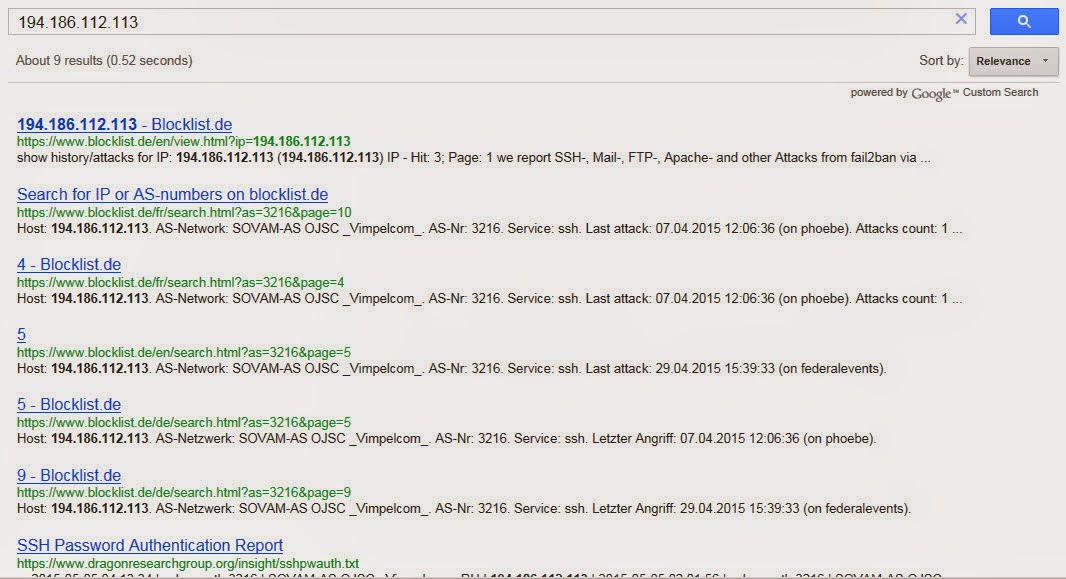
To demonstrate how context can be provided let’s say the IDS/IPS tripped on numerous connection attempts being made to a server running SSH. This security event could mean a few things. Someone may had forgotten their credentials and tried numerous times to log in or someone (or something) found the open SSH port on the server and tried numerous times to log in. The bigger picture may not be readily apparent so additional context is needed. A search on the source IP address that triggered the IDS/IPS alert in the Active Threat Search may show something similar to the image below:

The search on the source IP address provides a wealth of context for the security event. The same source IP address has attempted attacks against other systems. This means the security event was something trying to log in to the server and not someone forgetting their password. Context changes everything and the Active Threat Search at times can help provide this context.

The Active Threat Search can be found at the top of jIIr or directly at this link:
https://cse.google.com/cse/publicurl?cx=011905220571137173365:eo5wzloxe_m

**********Sites Last Updated on 05/24/2015**********

The following is the listing of sites indexed by the Active Threat Search and this section will be continuously updated.

Bambenek Consulting  http://osint.bambenekconsulting.com/feeds/
Binary Defense Systems  http://www.binarydefense.com/banlist.txt
Blocklist.de  http://www.blocklist.de
Cisco Threat Intelligence  http://tools.cisco.com/security/center/
Cyber Crime  http://cybercrime-tracker.net/
Dragon Research Group  http://dragonresearchgroup.org/insight/
Dshield  https://dshield.org/
Dynamoo’s Blog  http://blog.dynamoo.com/
Emerging Threats  http://rules.emergingthreats.net/
Emerging Threats List  https://lists.emergingthreats.net/pipermail/emerging-sigs
Feodo Tracker  https://feodotracker.abuse.ch/
hpHosts  http://hosts-file.net/
Malc0de Database  http://malc0de.com/database/
Malware Domain List  http://www.malwaredomainlist.com
MalwareDomains  http://www.malwaredomains.com/
Malware-Traffic-Analysis  http://www.malware-traffic-analysis.net
McAfee Threat Intelligence  http://www.mcafee.com/threat-intelligence
Malware URLs http://malwareurls.joxeankoret.com/
Multiproxy  http://multiproxy.org
MX Lab  http://blog.mxlab.eu/
OpenBL  http://www.us.openbl.org/
OpenPhish  https://openphish.com/
Palevo Tracker  https://palevotracker.abuse.ch/
Phish Tank  http://www.phishtank.com
Project Honeypot  https://www.projecthoneypot.org
SPAM404  http://www.spam404.com/
SPAMHAUS  www.spamhaus.org
SSL Blacklist https://sslbl.abuse.ch/blacklist/
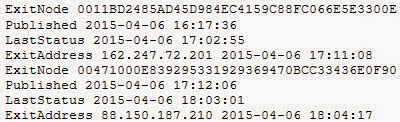
Tor Exit Addresses  https://check.torproject.org/exit-addresses
URLQuery  http://urlquery.net
VirusTotal  http://www.virustotal.com
VX Vault  http://vxvault.net/
Zeus Tracker  https://zeustracker.abuse.ch/ Continue reading Introducing the Active Threat Search

Introducing the Active Threat Search

Have you found yourself looking at a potential security event and wishing there was more context. The security event could be an IDS/IPS triggering on network activity, antivirus software flagging a file, or a SIEM rule alarming on activity in logs. By itself the security event may not provide a bigger picture about the activity. Has anyone else seen the same activity? Where did the file come from? Is the event part of a mass attack or is it unique? Being able to run queries on certain security event indicators can go a long way in providing context to what you are seeing. This post is the formal introduction of the Active Threat Search that can help you identify this context.

The Active Threat Search is another Custom Google search. Similar to the Digital Forensic Search, Vulnerability Search, and Malware Analysis Search (by Hooked on Mnemonics Worked for Me), the Active Threat Search harnesses the collective knowledge and research of the people/organizations who openly share intelligence information.

To demonstrate how context can be provided let’s say the IDS/IPS tripped on numerous connection attempts being made to a server running SSH. This security event could mean a few things. Someone may had forgotten their credentials and tried numerous times to log in or someone (or something) found the open SSH port on the server and tried numerous times to log in. The bigger picture may not be readily apparent so additional context is needed. A search on the source IP address that triggered the IDS/IPS alert in the Active Threat Search may show something similar to the image below:

The search on the source IP address provides a wealth of context for the security event. The same source IP address has attempted attacks against other systems. This means the security event was something trying to log in to the server and not someone forgetting their password. Context changes everything and the Active Threat Search at times can help provide this context.

The Active Threat Search can be found at the top of jIIr or directly at this link:
https://cse.google.com/cse/publicurl?cx=011905220571137173365:eo5wzloxe_m

**********Sites Last Updated on 05/24/2015**********

The following is the listing of sites indexed by the Active Threat Search and this section will be continuously updated.

Bambenek Consulting  http://osint.bambenekconsulting.com/feeds/
Binary Defense Systems  http://www.binarydefense.com/banlist.txt
Blocklist.de  http://www.blocklist.de
Cisco Threat Intelligence  http://tools.cisco.com/security/center/
Cyber Crime  http://cybercrime-tracker.net/
Dragon Research Group  http://dragonresearchgroup.org/insight/
Dshield  https://dshield.org/
Dynamoo’s Blog  http://blog.dynamoo.com/
Emerging Threats  http://rules.emergingthreats.net/
Emerging Threats List  https://lists.emergingthreats.net/pipermail/emerging-sigs
Feodo Tracker  https://feodotracker.abuse.ch/
hpHosts  http://hosts-file.net/
Malc0de Database  http://malc0de.com/database/
Malware Domain List  http://www.malwaredomainlist.com
MalwareDomains  http://www.malwaredomains.com/
Malware-Traffic-Analysis  http://www.malware-traffic-analysis.net
McAfee Threat Intelligence  http://www.mcafee.com/threat-intelligence
Malware URLs http://malwareurls.joxeankoret.com/
Multiproxy  http://multiproxy.org
MX Lab  http://blog.mxlab.eu/
OpenBL  http://www.us.openbl.org/
OpenPhish  https://openphish.com/
Palevo Tracker  https://palevotracker.abuse.ch/
Phish Tank  http://www.phishtank.com
Project Honeypot  https://www.projecthoneypot.org
SPAM404  http://www.spam404.com/
SPAMHAUS  www.spamhaus.org
SSL Blacklist https://sslbl.abuse.ch/blacklist/
Tor Exit Addresses  https://check.torproject.org/exit-addresses
URLQuery  http://urlquery.net
VirusTotal  http://www.virustotal.com
VX Vault  http://vxvault.net/
Zeus Tracker  https://zeustracker.abuse.ch/ Continue reading Introducing the Active Threat Search

Making Incident Response a Security Program Enabler

Incident response is frequently viewed as a reactive process. As soon as something bad happens that is when the incident response process is activated to respond to what occurred. This view is similar to insurance. Every month we spend money on buying insurance so it is available when we need it. It doesn’t matter if the insurance gets used once in a year or not at all; money is still spent on a monthly basis to buy it. In a way, it’s easy to see the similarity to the incident response process. Resources – such as staffing and technology – are invested in the incident response process. In some organizations there is a sizable investment while in others very little. The hope is something is available when the organizations need it. How can one change an organization’s view of incident response? How can you take a traditional reactive process and make it in to a proactive process that’s an enabler for the organization’s information security program? This post discusses one approach to make incident response a security enabler by addressing: continuous incident response, incident response metrics, root cause analysis, and data analytics.


Continuous Incident Response


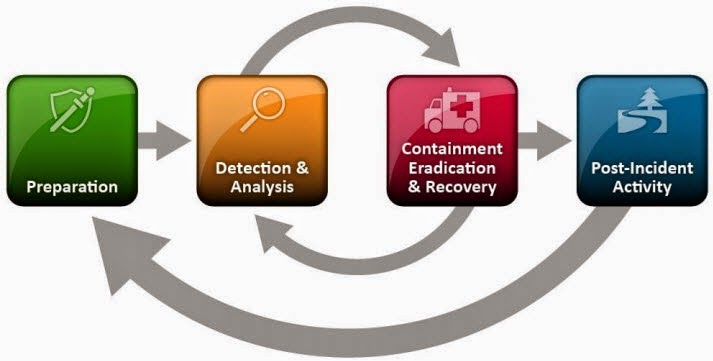
The traditional incident response models resemble the incident response lifecycle illustrated below that was obtained from the NIST Computer Security Incident Handling Guide.


Image obtained from http://nvlpubs.nist.gov/nistpubs/SpecialPublications/NIST.SP.800-61r2.pdf 


The first phase involves the organization preparing for future incidents. The next phase is when an incident is detected and analyzed. This is followed by the containment, eradication, and recovery activities. At times when trying to remediate an incident, activities cycle back to detection and analysis to determine if the incident was resolved. After the incident is eradicated and the organization returns to normal operations a post incident activity is performed to see what did and didn’t work out as planned. The lifecycle represents the traditional approach to incident response: incident detected -> organization responds -> incident eradicated -> organization returns to normal operations. This is the tradition reactive incident response process where the assumption is that nothing is going on until an incident is detected and after the incident is resolved it goes back to assuming nothing is going on.

To take a traditional reactive incident response process and make it in to a proactive process requires incident response to be seen in a different light. Organizations are under constant attack from daily malware infections to daily probing to daily exploit attempts to daily potential unauthorized access attempts. The model is no longer linear where an organization is waiting to detect an incident and then returning to normal operations. The new normal is being under constant attack and being at different stages in the incident response process concurrently. Richard Bejtlich stated in his book The Practice of Network Security Monitoring on page 188 regarding the model below:

the workflow in Figure 9-2 appears orderly and linear, but that’s typically not the case in real life. In fact, all phases of the detection and response processes may occur at the same time. Sometimes, multiple incidents are occurring; other times, the same incident occupies all four stages at once.”

Image obtained from http://www.nostarch.com/nsm

Richard expressed incident response is not a linear process with a start and end; on the contrary the process can be at different phases at the same time dealing with different incidents. Anton Chuvakin also touched on the non-linear incident response process in his post Incident Response: The Death of a Straight Line. Not only did he say that the “ “normal -> incident -> back to normal” is no more” but he summed up the situation organizations find themselves in.

“While some will try to draw a clear line between monitoring (before/after the incident) and incident response (during the incident), the line is getting much blurrier than many think.  Ongoing indicator scans (based on external and internal sources), malware and artifact reversing, network forensics “hunting”, etc all blur the line and become continuous incident response activities.”

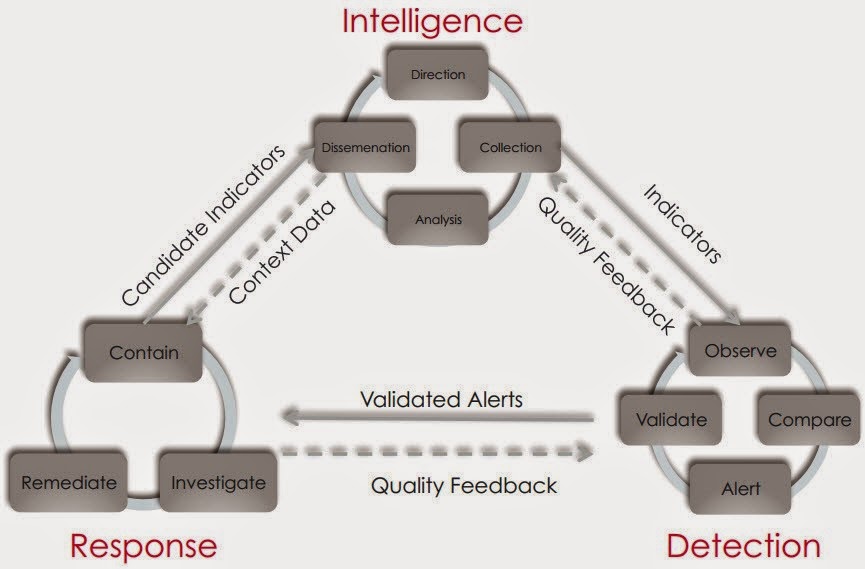
The light incident response needs to be seen in is that it is a continuous process instead of a linear one. Incident response is not something that starts and ends but is an ongoing cyclical process where an organization is constantly detecting and responding to incidents. A process similar to David Bianco’s the Intel-Driven Operations Cycle model shown below and was obtained from his The Pyramid of Pain Intel-Driven Detection and Response to Increase Your Adversary’s Cost of Operations presentation.

Image obtained from https://speakerdeck.com/davidjbianco/the-pyramid-of-pain-intel-driven-detection-and-response-to-increase-your-adversarys-cost-of-operations

Seeing incident response as a continuous process is one that everyone must see from security practitioners to incident responders to management. Changing people’s perspectives on incident response will take time and every opportunity to sell it will need to be seized (don’t sell FUD but layout the actual threat environment we find ourselves in.) In time the conversation will go from viewing incident response as insurance that may or may not be needed to viewing incident response as continuous where people are detecting and responding to the daily security incidents. The conversation will go from “do we really need to invest in this since we only had a few incidents last year” to “we are continuing seeing these incidents due to this security weakness so how can we address it since it’s an area of concern.”

Operationalize Incident Response Information


Changing the view of incident response from a linear process to a continuous one is not enough to make it a security program enabler. To be a security program enabler incident response needs to contribute to the organization’s security strategy to help influence where security resources are focused. Too often incident response tries to influence the security strategy in a reactive manner. The reactive process resembles the following: incident detected -> organization responds -> incident eradicated -> organization returns to normal operations -> incident response recommendations provided. The attempts to influence the security strategy is based on the most recent incident. In essence, recommendations are being made based on a single event instead being made based on trends from numerous events. Don’t get me wrong, there are times when recommendations from a single event do influence the security strategy but to make incident response a security program enabler there needs to be more.

To re-enforce this point, a story about a local credit union that happened years ago may help. The credit union happened to be located at a busy intersection; its location was very accessible from buses, cars, bikes, and walking. One day a person walked in to the credit union, handed the teller a note, and then walked out with money. As an outsider looking at this single event, there was nothing drastic implemented from any recommendations based on this single robbery. The next week a similar event occurred again with someone handing the teller a note and walking out with cash. This occurred a few more times and each robbery was very similar. The robbery involved a person handing a note to the teller without any visible weapons shown. The credit union looked at all the robberies and they must have seen this pattern. In response, the credit union implemented a compensating control and this control was double doors to trap any individual as they try to exit the bank. After this control was implemented the robberies stopped. This story shows how incident response can become a security program enabler. The first robbery was a single event and the recommendation may had been to install trap doors. However, installing trap doors takes essential resources from other areas and this may not be in the best interest of the organization. As more data is collected from different events it causes a pattern to emerge. Now taking essential resources from other areas is an easier decision since the data analysis shows installing trap doors is not addressing a single event but a re-occurring issue.

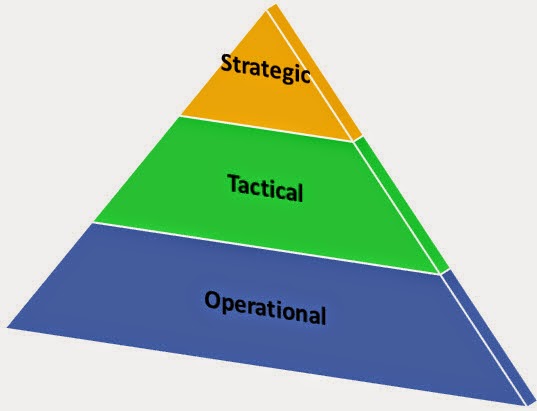
The continuous incident response process needs to move from only providing reactive recommendations to producing intelligence by operationalizing the information produced by enterprise incident response and detection processes. To accomplish this, data and information needs to be captured from the ongoing detection and response activities. Then this data and information is analyzed to produce intelligence to be used by the security program. Some intelligence is used by the response and detection processes themselves but other intelligence (especially ones developed through trend analysis) is reported to appropriate parties to influence the organization’s security strategy. Operationalizing incident response information results in creating intelligence at various levels in the intelligence pyramid.

The book Building an Intelligence-Led Security Program authored by Allan Liska describes the pyramid levels as follows:

“Strategic intelligence is concerned with long-term trends surrounding threats, or potential threats to an organization. Strategic intelligence is forward thinking and relies heavily on estimation – anticipating future behavior based on past actions or expected capabilities.”

“Tactical intelligence is an assessment of the immediate capabilities of an adversary. It focuses on the weaknesses, strengths, and the intentions of an enemy. An honest tactical assessment of an adversary allows those in the field to allocate resources in the most effective manner and engage the adversary at the appropriate time and with the right battle plan.”

“Operational intelligence is real time, or near real-time intelligence, often derived from technical means, and delivered to ground troops engaged in activity against the adversary. Operational intelligence is immediate, and has a short time to live (TTL). The immediacy of operational intelligence requires that analysts have instant access to the collection systems and be able to put together FINTEL in a high-pressure environment.”

As it relates to making incident response process a security program enabler, the focus needs to be on making the process contribute to the organization’s security strategy by producing tactical and strategic intelligence. Tactical intelligence can highlight the organization’s weaknesses and strengths then show where security resources can be used more effectively. Strategic intelligence can influence the direction of the organization’s long term security strategy. Incident response starts to move from being viewed as a reactive process to a proactive one once it starts adding value to other areas in an organization’s security program.

Improve Root Cause Analysis Capabilities


Before one can start to operationalize incident response information to produce intelligence at various levels in the intelligence pyramid they must first improve their root cause analysis capabilities. Root cause analysis is trying to determine how an attacker went after another system or network by identifying and understanding the remnants they left on the systems involved during the attack. This is a necessary activity for one to discover information during a security incident that can be operationalized. The Verizon Data Breach Investigations Report is an excellent example about the type of information one can discover by performing root cause analysis. The report highlights trends from “time to incident discovery” to “time to compromise” to exploited vulnerabilities to frequency of attack types to hacking actions. None of this data would had been available for analysis if root cause analysis wasn’t completed on these incidents.

Take the hypothetical scenario of a malware infected system. Root cause analysis discovered the attacker compromised the system using a phishing email containing a malicious Word document. At this point there is various data one can then turn in to intelligence. At the operationally level, the email’s subject line, content, from address, and Word document attachment name can all be documented and then turned in to intelligence for response and detection activities. The same can occur for the URL inside the Word document and the malware it downloads. Doing root cause analysis on all infections can then make data available to do trend analysis. Is it a pattern for the organization employees to be socially engineered through Word documents? Can resources be applied in other areas such as security awareness training to combat this threat? In time, more and more data can be collected to reveal other trends to help drive security. Performing root cause analysis on each incident is needed to operationalize incident response information to produce intelligence in this manner. The Compromised Root Cause Analysis Model is one model to use and it is described in the post Compromised Root Cause Analysis Model Revisited.

Incident Response Metrics


The outcome from performing root cause analysis on each incident is discoverable information. It’s not enough to consistently do root cause analysis to discover information; the information needs to be documented and analyzed to make it into intelligence. Different options are available to document security incident information but in my opinion the best available schema is the VERIS Framework. The “Vocabulary for Event Recording and Incident Sharing (VERIS) is a set of metrics designed to provide a common language for describing security incidents in a structured and repeatable manner.” The VERIS Framework is open and can be modified to meet an organization’s needs.

The schema is well designed but to support an internal incident response process some modifications may be needed. This post won’t go in to great detail about the needed modifications but I will mention a few to make the schema better support internal incident response. In the Incident Tracking section, to make it easier to track security incidents the following can be added: Incident Severity (to match the incident response process severity for incidents), Hostname (of the targeted system), IP Address (of the targeted system), Username (involved in the incident), and Source IP Address (of the attacker’s system). In the Victim Demographics section, these may or may not apply for an internal incident response process. Personally, I don’t see the need for tracking this information if the incident response process supports the same entity. In the Incident Description section, the biggest change is outlining the expected values for the vectors and vulnerabilities. For example, for the vulnerabilities list out each possible vulnerable application – such as Java vulnerability – instead of allowing for specific CVEs. This reduces the amount of work needed on doing root cause analysis without losing too much on the metrics side. The last changes I’ll discuss are for the Discovery and Response section. In this section make sure to account for the various discovery methods the organization may use to detect incidents as well as the intelligence sources behind those methods. This slight change enables an organization to measure how they are detecting security incidents and to evaluate the return on investment for different intelligence sources.

Data Analysis


Information that is documented is only data and does not become intelligence until it is analyzed and refined so it is useful to others. There are different options available for organizations to produce intelligence from the information discovered during root cause analysis. The book Data-Driven Security: Analysis, Visualization and Dashboards goes in to detail about how one can do data analysis with free and/or open source tools. The route I initially took was to allow me to focus on the incident response process without getting bogged down trying to create visualizations to identify trends. At my company (this is the only item in this post directly tied to my employer and I only mention it in hopes it helps my readers) we went with a license for Tableau Desktop and I bought a personal copy of the book Tableau Your Data!: Fast and Easy Visual Analysis with Tableau Software. The combination of Tableau Desktop and the VERIS Framework makes it very effective at producing strategic and tactical intelligence that can be consumed by the security program. In minutes, you can create visualizations to highlight what departments in an organization is most susceptible to phishing attacks or to quickly identify the trends explaining how malware is entering the organization. The answers and intelligence one can gain from the incident response data is only limited by one’s creativity and the ability of those consuming the intelligence.

Making Incident Response a Security Program Enabler


The approach an organization can take to take incident response from a reactive process to proactive one involves the following steps:

      – Improving an organization’s incident response capabilities
      – Improving an organization’s root cause analysis capabilities
      – Improving an organization’s security monitoring capabilities
      – Influencing others to see incident response as a continuous process
      – Operationalizing incident response information
      – Collecting and documenting data for the organization’s incident response metrics
      – Analyzing the organization’s incident response metrics to produce intelligence
      – Presenting the intelligence to appropriate stakeholders

Making incident response a security program enabler is a gradual process requiring organization buy-in and resources to make it happen. As DFIR practitioners, we can only be the voice in the wilderness telling others incident response can be more than a reactive process. It can be more than an insurance policy. It can be a continuous process enabling an organization’s security strategy and helping guide how security resources are used. A voice hoping to influence others to make the right decision to better protect their organization. Continue reading Making Incident Response a Security Program Enabler

Posted in IR

Making Incident Response a Security Program Enabler

Incident response is frequently viewed as a reactive process. As soon as something bad happens that is when the incident response process is activated to respond to what occurred. This view is similar to insurance. Every month we spend money on buying insurance so it is available when we need it. It doesn’t matter if the insurance gets used once in a year or not at all; money is still spent on a monthly basis to buy it. In a way, it’s easy to see the similarity to the incident response process. Resources – such as staffing and technology – are invested in the incident response process. In some organizations there is a sizable investment while in others very little. The hope is something is available when the organizations need it. How can one change an organization’s view of incident response? How can you take a traditional reactive process and make it in to a proactive process that’s an enabler for the organization’s information security program? This post discusses one approach to make incident response a security enabler by addressing: continuous incident response, incident response metrics, root cause analysis, and data analytics.


Continuous Incident Response


The traditional incident response models resemble the incident response lifecycle illustrated below that was obtained from the NIST Computer Security Incident Handling Guide.


Image obtained from http://nvlpubs.nist.gov/nistpubs/SpecialPublications/NIST.SP.800-61r2.pdf 


The first phase involves the organization preparing for future incidents. The next phase is when an incident is detected and analyzed. This is followed by the containment, eradication, and recovery activities. At times when trying to remediate an incident, activities cycle back to detection and analysis to determine if the incident was resolved. After the incident is eradicated and the organization returns to normal operations a post incident activity is performed to see what did and didn’t work out as planned. The lifecycle represents the traditional approach to incident response: incident detected -> organization responds -> incident eradicated -> organization returns to normal operations. This is the tradition reactive incident response process where the assumption is that nothing is going on until an incident is detected and after the incident is resolved it goes back to assuming nothing is going on.

To take a traditional reactive incident response process and make it in to a proactive process requires incident response to be seen in a different light. Organizations are under constant attack from daily malware infections to daily probing to daily exploit attempts to daily potential unauthorized access attempts. The model is no longer linear where an organization is waiting to detect an incident and then returning to normal operations. The new normal is being under constant attack and being at different stages in the incident response process concurrently. Richard Bejtlich stated in his book The Practice of Network Security Monitoring on page 188 regarding the model below:

the workflow in Figure 9-2 appears orderly and linear, but that’s typically not the case in real life. In fact, all phases of the detection and response processes may occur at the same time. Sometimes, multiple incidents are occurring; other times, the same incident occupies all four stages at once.”

Image obtained from http://www.nostarch.com/nsm

Richard expressed incident response is not a linear process with a start and end; on the contrary the process can be at different phases at the same time dealing with different incidents. Anton Chuvakin also touched on the non-linear incident response process in his post Incident Response: The Death of a Straight Line. Not only did he say that the “ “normal -> incident -> back to normal” is no more” but he summed up the situation organizations find themselves in.

“While some will try to draw a clear line between monitoring (before/after the incident) and incident response (during the incident), the line is getting much blurrier than many think.  Ongoing indicator scans (based on external and internal sources), malware and artifact reversing, network forensics “hunting”, etc all blur the line and become continuous incident response activities.”

The light incident response needs to be seen in is that it is a continuous process instead of a linear one. Incident response is not something that starts and ends but is an ongoing cyclical process where an organization is constantly detecting and responding to incidents. A process similar to David Bianco’s the Intel-Driven Operations Cycle model shown below and was obtained from his The Pyramid of Pain Intel-Driven Detection and Response to Increase Your Adversary’s Cost of Operations presentation.

Image obtained from https://speakerdeck.com/davidjbianco/the-pyramid-of-pain-intel-driven-detection-and-response-to-increase-your-adversarys-cost-of-operations

Seeing incident response as a continuous process is one that everyone must see from security practitioners to incident responders to management. Changing people’s perspectives on incident response will take time and every opportunity to sell it will need to be seized (don’t sell FUD but layout the actual threat environment we find ourselves in.) In time the conversation will go from viewing incident response as insurance that may or may not be needed to viewing incident response as continuous where people are detecting and responding to the daily security incidents. The conversation will go from “do we really need to invest in this since we only had a few incidents last year” to “we are continuing seeing these incidents due to this security weakness so how can we address it since it’s an area of concern.”

Operationalize Incident Response Information


Changing the view of incident response from a linear process to a continuous one is not enough to make it a security program enabler. To be a security program enabler incident response needs to contribute to the organization’s security strategy to help influence where security resources are focused. Too often incident response tries to influence the security strategy in a reactive manner. The reactive process resembles the following: incident detected -> organization responds -> incident eradicated -> organization returns to normal operations -> incident response recommendations provided. The attempts to influence the security strategy is based on the most recent incident. In essence, recommendations are being made based on a single event instead being made based on trends from numerous events. Don’t get me wrong, there are times when recommendations from a single event do influence the security strategy but to make incident response a security program enabler there needs to be more.

To re-enforce this point, a story about a local credit union that happened years ago may help. The credit union happened to be located at a busy intersection; its location was very accessible from buses, cars, bikes, and walking. One day a person walked in to the credit union, handed the teller a note, and then walked out with money. As an outsider looking at this single event, there was nothing drastic implemented from any recommendations based on this single robbery. The next week a similar event occurred again with someone handing the teller a note and walking out with cash. This occurred a few more times and each robbery was very similar. The robbery involved a person handing a note to the teller without any visible weapons shown. The credit union looked at all the robberies and they must have seen this pattern. In response, the credit union implemented a compensating control and this control was double doors to trap any individual as they try to exit the bank. After this control was implemented the robberies stopped. This story shows how incident response can become a security program enabler. The first robbery was a single event and the recommendation may had been to install trap doors. However, installing trap doors takes essential resources from other areas and this may not be in the best interest of the organization. As more data is collected from different events it causes a pattern to emerge. Now taking essential resources from other areas is an easier decision since the data analysis shows installing trap doors is not addressing a single event but a re-occurring issue.

The continuous incident response process needs to move from only providing reactive recommendations to producing intelligence by operationalizing the information produced by enterprise incident response and detection processes. To accomplish this, data and information needs to be captured from the ongoing detection and response activities. Then this data and information is analyzed to produce intelligence to be used by the security program. Some intelligence is used by the response and detection processes themselves but other intelligence (especially ones developed through trend analysis) is reported to appropriate parties to influence the organization’s security strategy. Operationalizing incident response information results in creating intelligence at various levels in the intelligence pyramid.

The book Building an Intelligence-Led Security Program authored by Allan Liska describes the pyramid levels as follows:

“Strategic intelligence is concerned with long-term trends surrounding threats, or potential threats to an organization. Strategic intelligence is forward thinking and relies heavily on estimation – anticipating future behavior based on past actions or expected capabilities.”

“Tactical intelligence is an assessment of the immediate capabilities of an adversary. It focuses on the weaknesses, strengths, and the intentions of an enemy. An honest tactical assessment of an adversary allows those in the field to allocate resources in the most effective manner and engage the adversary at the appropriate time and with the right battle plan.”

“Operational intelligence is real time, or near real-time intelligence, often derived from technical means, and delivered to ground troops engaged in activity against the adversary. Operational intelligence is immediate, and has a short time to live (TTL). The immediacy of operational intelligence requires that analysts have instant access to the collection systems and be able to put together FINTEL in a high-pressure environment.”

As it relates to making incident response process a security program enabler, the focus needs to be on making the process contribute to the organization’s security strategy by producing tactical and strategic intelligence. Tactical intelligence can highlight the organization’s weaknesses and strengths then show where security resources can be used more effectively. Strategic intelligence can influence the direction of the organization’s long term security strategy. Incident response starts to move from being viewed as a reactive process to a proactive one once it starts adding value to other areas in an organization’s security program.

Improve Root Cause Analysis Capabilities


Before one can start to operationalize incident response information to produce intelligence at various levels in the intelligence pyramid they must first improve their root cause analysis capabilities. Root cause analysis is trying to determine how an attacker went after another system or network by identifying and understanding the remnants they left on the systems involved during the attack. This is a necessary activity for one to discover information during a security incident that can be operationalized. The Verizon Data Breach Investigations Report is an excellent example about the type of information one can discover by performing root cause analysis. The report highlights trends from “time to incident discovery” to “time to compromise” to exploited vulnerabilities to frequency of attack types to hacking actions. None of this data would had been available for analysis if root cause analysis wasn’t completed on these incidents.

Take the hypothetical scenario of a malware infected system. Root cause analysis discovered the attacker compromised the system using a phishing email containing a malicious Word document. At this point there is various data one can then turn in to intelligence. At the operationally level, the email’s subject line, content, from address, and Word document attachment name can all be documented and then turned in to intelligence for response and detection activities. The same can occur for the URL inside the Word document and the malware it downloads. Doing root cause analysis on all infections can then make data available to do trend analysis. Is it a pattern for the organization employees to be socially engineered through Word documents? Can resources be applied in other areas such as security awareness training to combat this threat? In time, more and more data can be collected to reveal other trends to help drive security. Performing root cause analysis on each incident is needed to operationalize incident response information to produce intelligence in this manner. The Compromised Root Cause Analysis Model is one model to use and it is described in the post Compromised Root Cause Analysis Model Revisited.

Incident Response Metrics


The outcome from performing root cause analysis on each incident is discoverable information. It’s not enough to consistently do root cause analysis to discover information; the information needs to be documented and analyzed to make it into intelligence. Different options are available to document security incident information but in my opinion the best available schema is the VERIS Framework. The “Vocabulary for Event Recording and Incident Sharing (VERIS) is a set of metrics designed to provide a common language for describing security incidents in a structured and repeatable manner.” The VERIS Framework is open and can be modified to meet an organization’s needs.

The schema is well designed but to support an internal incident response process some modifications may be needed. This post won’t go in to great detail about the needed modifications but I will mention a few to make the schema better support internal incident response. In the Incident Tracking section, to make it easier to track security incidents the following can be added: Incident Severity (to match the incident response process severity for incidents), Hostname (of the targeted system), IP Address (of the targeted system), Username (involved in the incident), and Source IP Address (of the attacker’s system). In the Victim Demographics section, these may or may not apply for an internal incident response process. Personally, I don’t see the need for tracking this information if the incident response process supports the same entity. In the Incident Description section, the biggest change is outlining the expected values for the vectors and vulnerabilities. For example, for the vulnerabilities list out each possible vulnerable application – such as Java vulnerability – instead of allowing for specific CVEs. This reduces the amount of work needed on doing root cause analysis without losing too much on the metrics side. The last changes I’ll discuss are for the Discovery and Response section. In this section make sure to account for the various discovery methods the organization may use to detect incidents as well as the intelligence sources behind those methods. This slight change enables an organization to measure how they are detecting security incidents and to evaluate the return on investment for different intelligence sources.

Data Analysis


Information that is documented is only data and does not become intelligence until it is analyzed and refined so it is useful to others. There are different options available for organizations to produce intelligence from the information discovered during root cause analysis. The book Data-Driven Security: Analysis, Visualization and Dashboards goes in to detail about how one can do data analysis with free and/or open source tools. The route I initially took was to allow me to focus on the incident response process without getting bogged down trying to create visualizations to identify trends. At my company (this is the only item in this post directly tied to my employer and I only mention it in hopes it helps my readers) we went with a license for Tableau Desktop and I bought a personal copy of the book Tableau Your Data!: Fast and Easy Visual Analysis with Tableau Software. The combination of Tableau Desktop and the VERIS Framework makes it very effective at producing strategic and tactical intelligence that can be consumed by the security program. In minutes, you can create visualizations to highlight what departments in an organization is most susceptible to phishing attacks or to quickly identify the trends explaining how malware is entering the organization. The answers and intelligence one can gain from the incident response data is only limited by one’s creativity and the ability of those consuming the intelligence.

Making Incident Response a Security Program Enabler


The approach an organization can take to take incident response from a reactive process to proactive one involves the following steps:

      – Improving an organization’s incident response capabilities
      – Improving an organization’s root cause analysis capabilities
      – Improving an organization’s security monitoring capabilities
      – Influencing others to see incident response as a continuous process
      – Operationalizing incident response information
      – Collecting and documenting data for the organization’s incident response metrics
      – Analyzing the organization’s incident response metrics to produce intelligence
      – Presenting the intelligence to appropriate stakeholders

Making incident response a security program enabler is a gradual process requiring organization buy-in and resources to make it happen. As DFIR practitioners, we can only be the voice in the wilderness telling others incident response can be more than a reactive process. It can be more than an insurance policy. It can be a continuous process enabling an organization’s security strategy and helping guide how security resources are used. A voice hoping to influence others to make the right decision to better protect their organization. Continue reading Making Incident Response a Security Program Enabler

Posted in IR

Python: print “Hello DFIR World!”

Coursera’s mission is to “provide universal access to the world’s best education.” Judging by their extensive course listing it appears as if they are delivering on their mission since the courses are free for anyone to take. I knew about Coursera for some time but only recently did I take one of their courses (Python Programming for Everybody.) In this post I’m sharing some thoughts about my Coursera experience, the course I took, and how I immediately used what I learned.

Why Python? Why Coursera?


Python is a language used often in information security and DFIR. Its usage is varied from simple scripts to extensive programs. My interest in Python was modest; I wanted to be able to modify (if needed) Python tools I use and to write automation scripts to make my job easier. Despite the wealth of resources available to learn Python, I wanted a more structured environment to learn the basics. An environment that leverages lectures, weekly readings, and weekly assignments to explore the topic. My plan was to learn the basics then proceed exploring how Python applies to information security using the books Black Hat Python and Violent Python. Browsing through the Cousera offerings I found the course Programming for Everybody (Python). The course “aims to teach everyone to learn the basics of programming computers using Python. The course has no pre-requisites and avoids all but the simplest mathematics.” Teaches the basics in a span of 10 weeks without the traditional learning to code by mathematics; the course was exactly what I was looking for.

Programming for Everybody (Python)


I’m not providing a full fledge course review but I did want to provide some thoughts on this course. The course itself is “designed to be a first programming course using the popular Python programming language.” This is important and worth repeating. The course is designed to be someone’s first programming course. If you already know how to code in a different language then this course isn’t for you. I didn’t necessary fit the target audience since I know how to script in both batch and Perl. However, I knew this was a beginner’s course going in so I expected things would move slowly. I could easily overlook this one aspect since my interest was to build a foundation in Python. The course leveraged some pretty cool technology for an online format. The recorded lectures used a split screen between the professor, his slides, and his ability to write on the slides as he taught. The assignments had an auto grader where students complete assignments by executing their programs and the grader confirms if the program was written correctly. The text book is Python for Informatics: Exploring Information, which focuses more on trying to solve data analysis problems instead of math problems like traditional programming texts. The basics covered include: variables, conditional code, functions, loops/iteration, strings, files, lists, dictionaries, tuples, and regular expressions.

Overall, spending the past 10 weeks completing this course was time well spent. Sure, at times I wish times moved faster but I did achieve what I wanted to. Exploring the basics of the Python language so I can have a foundation prior to exploring how the language applies to security work. The last thing I wanted to mention about the course, which I highly respect. The entire course from the textbook to the lecture videos is licensed under a Creative Common Attribution making it available for pretty much anyone to use.

Applying What I Learned


The way I tend to judge courses, trainings, and books is by how much of the content can be applied to my work. If the curriculum is not relevant to one’s work than what is the point in wasting time completing it? It’s just my opinion but judging courses and trainings in this manner has proven to be effective. To illustrate this point as it applies to the Python Programming for Everybody course I’m showing how the basics I learned solved a recent issue. One issue I was facing is how to automate parsing online content and consuming it in a SIEM. This is a typical issue for those wishing to use open source threat intelligence feeds. One approach is to manually parse it in to a machine readable form that your SIEM and tools can use. Another and a better approach is to automate as much as possible through scripting. I took the later approach by creating a simple script to automate this process. For those interested in Python usage in DFIR should check out David Cowen’s Automating DFIR series or Tom Yarrish’s Year of Python series.

There are various open source threat intelligence feeds one can incorporate in to their enterprise detection program. Kyle Maxwell’s presentation Open Source Threat Intelligence touched on some of them. For this post, I’m only discussing one and it was something I was interested in knowing how to do it. Tor is an anonymity service that enables people to hide where they are coming from as they surf the Internet. Tor has a lot of legitimate uses and just because someone is using it does not mean they are doing something wrong. Being able to flagged users connecting to your network from Tor can add context to other activity. Is the SQL injection IDS alert a false positive? Is the SQL injection IDS alert coming from someone who is also using Tor a false positive? See what I mean by adding context. This was an issue that needed a Python solution (or at least a solution where I could apply what I learned.)

To accomplish adding Tor context to activity in my SIEM I first had to identify the IP addresses for the Tor exit nodes. Users using the service will have the IP address of the exit node they are going through. The Tor Project FAQs provides an answer to the question “I want to ban the Tor network from my service.” After trying to discourage people from blocking two options are presented by using either the Tor exit relay list or a DNS-based list. The Tor exit relay list webpage has a link to the current list of exit addresses. The screenshot below shows how this information is presented:

Now we’ll explore the script I wrote to parse the Tor exit node IP addresses into a form my SIEM can consume, which is a text file with one IP address per line. The first part –as shown in the image below – imports the urllib2 module that is used to open URLs. This part wasn’t covered in the course but wasn’t too difficult to figure out by Googling. The last line in the image creates a dictionary called urls. A dictionary associates a key with a value and in this case the key is tor-exit with the value being the URL to the Tor exit relay list. Leveraging a dictionary allows the script to be extended to support other feeds without having to make significant changes to the script.

The next portion of the script as shown below is where the first for loop occurs. The for loop will process each entry (key and value pair) in the urls dictionary. The try and except is a method to account for errors such as a URL not working. Inside the try section the URL is opened in to a variable named file and then it is read in to a variable named data using the urllib2 readlines() option. Lastly, a file is created to store the output using the key value and the file handle is named output.

The next part of the script –image below – is specific to each threat feed being parsed. This accounts for the differences in the way threat feeds present data. The if statement checks to see if the key matches “tor-exit” and if it does then the second for loop executes. This for loop reads each line in the data variable (hence the data listed at the URL.) As each line is read there is additional actions performed such as skipping blank lines and any line that doesn’t start with the string “ExitAddress.” For the lines that do start with this string, the line is broken up in to a list named words. Basically, it breaks the line up into different values by using the space as a separator. The IP address is the second value so it is contained in the second index location in the words list (words[1]). The IP address is then written to the output file and after each line is processed a message is displayed saying processing completed.

The screenshot below shows the script running.

The end result is a text file containing the Tor exit IP addresses with one address per line. This text file can then be automatically consumed by my SIEM or I can use it when analyzing web logs to flag any activity involving Tor.

It’s Basic but Works


Harlan recently said in his Blogging post “it doesn’t matter how new you are to the industry, or if you’ve been in the industry for 15 years…there’s always something new that can be shared, whether it’s data, or even just a perspective.” My hope with this post is it would be useful to others who are not programmers but want to learn Python. Coursera is a good option that can teach you the basics. Even just learning the basics can extend your DFIR capabilities as demonstrated by my simple script. Continue reading Python: print “Hello DFIR World!”